About the Director
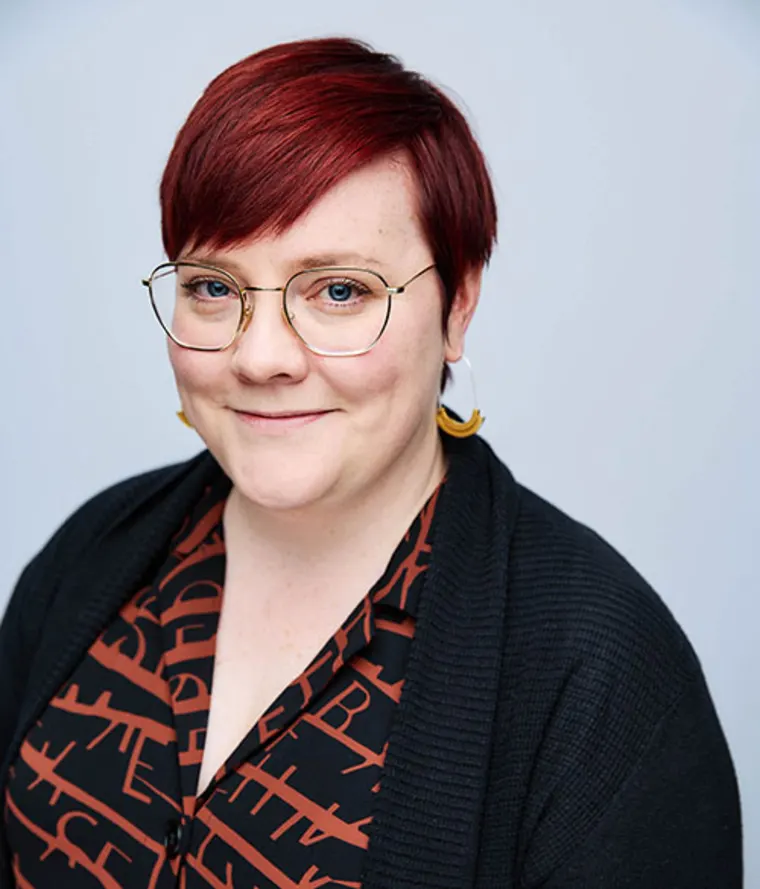
Meet Katie Gallagher, Director of the Joan H. Marks Graduate Program in Human Genetics
"I take pride in shaping the future of genetic counselors and recognize the colossal reputation our program has. I see the program as forward-thinking and a beacon of innovation, capable of guiding the profession towards positive change, and I’m excited to be part of that work."
Background
Katie took over directorship of the program on May 1, 2024. She is a 2015 graduate of the program and has served in a number of roles, including clinical supervisor, course instructor, and, most recently, assistant director, since joining the Human Genetics program staff in 2016. An accomplished certified genetic counselor and educator with proven success in settings of innovation and rapid evolution, Katie has experience in clinical pediatric genetics, laboratory genetics services, and genomics research.
One particular area of focus for Katie is a commitment to promoting diversity, equity, inclusion, and belonging within the program and in the genetic counseling profession.
“I fervently believe that diversity is not just an aspiration but an essential driver of progress in our field,” she said.
Katie earned her BS from Laurentian University. Her past experience includes being the Lead Pediatric Genetic Counselor at the Children’s Hospital at Montefiore where she also engaged in clinical research through the NYCKidSeq genomic sequencing research study. More recently, she was a genetic counselor at Invitae Corporation. In 2020, she received the Joan H. Marks Graduate Program in Human Genetics Distinguished Teaching Award.
Interests
Professional Interests
Pediatrics, Rare Disease, Genome Sequencing, Inborn Errors of Metabolism, DEI in medicine, LGBTQIA+ healthcare.
Personal Interests
Travel, Spending time with family, Reading.
Katie Answers Your Questions
Excerpted from SLC podcast. Listen to the entire interview here.
What does the director of the genetic counseling program do?
My main role is to train the next generation of genetic counselors. I don’t do this alone- I oversee a team of wonderful educators that does that!
What is a genetics counselor?
The profession of genetic counseling actually started here at Sarah Lawrence. It started in the late 60s, around the time that genetic testing was first becoming part of medical care. There wasn't a profession where someone could sit down with families and talk about something genetic that was running in a family, and provide them with not just medical support, but also counseling, emotional support, psychosocial support. The idea of genetic counseling was born here, and has evolved greatly over time.
What do genetic counselors do now?
Now, genetic counselors work in cancer, pediatrics, cardiology- really any medical area you can think of. Genetic testing is readily available, maybe too available sometimes. Genetic counselors are health care providers that assist doctors in working with patients and families who have genetic disorders running in their family or have suspected genetic disorders that they're trying to determine and diagnose. We help determine the right test for that patient or family, and the right medical and psychosocial support.
So would that be the goal of genetic counseling then?
One of the goals is diagnosis, yes. A lot of the time, however, genetic counselors come in post-diagnosis to support a family through what this diagnosis truly means for them. They can help them make big decisions like should they have children? Do other family members need or want to be tested for whatever was found in that first person in the family? and many other large milestone decisions someone might make based on their health information. Some of the time this is information that is new, you have no health problems, but now you know there's something in your future that could come up. Sometimes it's something that affects babies when they're born and we would know early. No matter what, all of it comes with major life decisions. Counselors come in not just to assist with diagnosis, although that's part of our job, but also to assist in helping patients understand what it means and helping support people in making decisions for themselves based on that information.
What do you think genetic counseling will evolve to become?
I think that it's evolved a lot over the last 56 years of its existence, because the genetic testing technology has evolved so much. What we can test for- and what we are allowed to test for- is changing. So, I think there's becoming more of an interest in genetic testing. There is “entertainment” genetic testing- where you do it for fun to find out different traits that may or may not impact your health. Then there's genetic testing that's really impactful to your health. The lines between those are blurring and I think as entertainment genetic testing becomes more commonplace, people are going to find out things that they may or may not like. Genetic Counseling may have to evolve with that to meet people in those non-health care spaces that right now we're not meeting them at. I also think genetic counselors are likely to become a more common profession that people interact with, like in primary care offices. Right now, genetic counselors work with a genetics doctor, a geneticist, and most people have never seen a geneticist before. The people who are coming there have very specific concerns. I think it will be more common that your cardiologist, or your primary care doctor, or your GI doctor, for example, have a genetic counselor on staff. As genetic testing becomes more part of preventative care, it will become something that more people have access to and knowledge about for themselves. And genetic counselors will just become a more commonplace health care professional than they are now.
What about this field fascinates you?
I love the fact that this profession is not just based in science- I love science and I love genetics- but I was never a person who wanted to work in a lab, for example, reading this DNA code myself. What I love about this is the humanistic aspect of the profession, where we really can sit down with people who have different reactions to the same piece of information, different ways of processing their life based on specific information. We can help them navigate that in some way, shape, or form. So, I think it's really this fact that we're merging science and counseling and psychosocial support together that makes it something unique and something that I don't think will be taken away completely- even with Al and other technologies. We're still going to, I think, need that humanistic aspect of being able to talk through difficult decisions with someone who can help support this through them, and help educate you on different factors if you want to consider in making that decision. So for me, it's that kind of merging of two fields that makes it super interesting.
What brought you to Sarah Lawrence College?
For people who are in the genetic counseling profession, Sarah Lawrence College is a very well-known name because it's where genetic counseling was born. In addition, it's the biggest program in the country, and the first program in the world. So, of course it was on my radar when I started thinking about genetic counseling as a profession. I met a genetic counselor. I thought it was cool. I started exploring it. And when I researched genetic counseling training programs, Sarah Lawrence is one of the first ones that comes up. So, there was that aspect of the reputation of Sarah Lawrence. Then, when I started exploring the many other programs that exist, Sarah Lawrence stood out to me because it exists in a liberal arts college, which is actually very unique for a genetic counseling program. Most are embedded in medical schools. The fact that it was embedded in a school that also appreciates arts and humanities- and we have this ability to incorporate all of that into our curriculum- it really provides an even more human-like thought process around the profession, I think is very unique. We're also very embedded in the community, in different hospitals and different medical centers all around New York, which means our students have this sort of unique opportunity to see lots of different medical settings rather than the one medical center that a program may be housed within. I found that, for me, that was a valuable aspect of training that I wanted. So ultimately, those things made my decision, and I still love those parts of the program now in the Director seat.
What have you enjoyed most about working at Sarah Lawrence?
I think the people- the students, being a big part of the people along with the faculty, the staff, the dedication of genetic counselors in the area to want to help train the next generation of genetic counselors- it makes my job much easier, and allows our students to get this well-rounded experience and hear from so many different experts. We rely on over 250 different people to interact with our students to complete their training. This includes guest lecturers in very specific genetics fields and genetic counselors working in lots of different hospital settings. So ultimately, for me, it's the people who make my job easy.
Have you established a healthy work-life balance?
Well, I think as a genetic counselor that can be very difficult. Even now that I'm in the education space, you're working with a lot of difficult decisions and difficult discussions. You're delivering bad news, tough news to families and to patients all the time. Now I work with students who are learning how to do that. It can be emotionally draining to be that person who delivers unexpected news. Even when you can support someone in those moments, they're generally not walking away happy- maybe content or able to make a decision- but not usually happy with what they may have been handed. So, I think it's really important to find ways to support yourself. I also think we have a very supportive community, because we're all in this together, It's a very tight knit community. There aren't a lot of genetic counselors. Generally, we all have one degree of separation from each other. For me, it's been finding other people who are experiencing similar work and talking through it with them. Also, spending time with my own family, of course. And so I think at this point in time, I have found ways to navigate that, and we really make it a priority to work with our students to think about themselves, their own self-reflection, their own ways that they work through hard cases to maintain their own mental health as much as possible in those moments. This job is interesting. I'm new as a director to the program, and although I have always felt accountability to my patients, the accountability I feel to the students in the program is almost above and beyond that. It's a feeling I didn't expect to feel- how much I value their experience. I want them to look back on this experience and believe that it was positive, believe that it helped them become a good genetic counselor, prepared them to enter the field, and that they can then provide positive work for their patients.
What's something you'd like people to know about the Human Genetics Program that they might not know otherwise?
I think a lot of people haven't heard of genetic counseling at all. Generally, people who are researching our program have. But we really desire diversity in our program. That means new ways of teaching people what the profession is. A lot of people find out what the profession is because they've had to see a genetic counselor and then they think “huh, this is cool. Maybe I would be interested in doing this at some point”. Which is great, because a lot of our students have their own personal connection to the profession in some way, shape or form.
Our program here at Sarah Lawrence really values people coming from different backgrounds. We don't need a class full of people who've been studying genetics their entire career up until this point. We are the type of program who wants a diverse representation of backgrounds, of experiences, of beliefs. We're thinking of new ways to promote that in different ways and engage new communities. I think a lot of people think, “oh, I have to be a science person for this”. Yes, there is an element of science, but there's also a big element of interacting with humans that doesn't require you to have been an ‘A’ student in all your organic chemistry and biology classes to be successful as a genetic counselor. We see that and we really prioritize that in the students who enter into our program.
How can students get the most out of their education here?
I think by seeing each opportunity as a learning opportunity. Even the hard things, even the annoying parts of being in a graduate program, that they are all teaching you something. Try to reframe your thinking to see that. I think it ultimately allows you to then integrate into the workforce with more positivity and more ability to adapt to your surroundings.