Filed under:
This program is the most community- and care-centered program I’ve ever worked in.
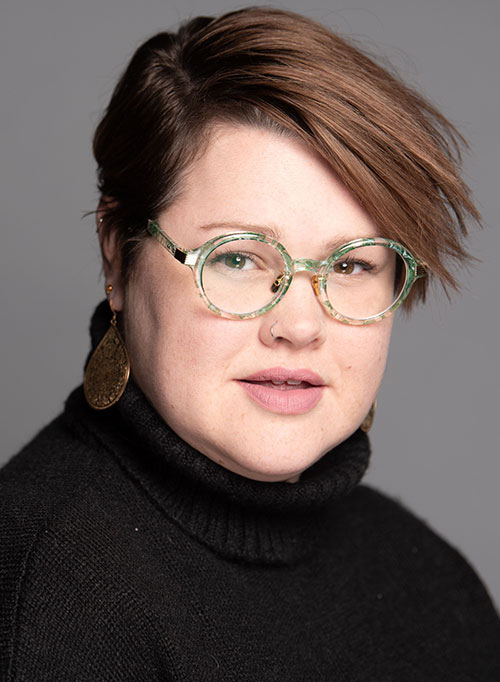 Theatre faculty member and Sarah Lawrence College alumna Lauren Reinhard MFA ’16 brings a dual perspective to her work as both an educator and a practicing theatre artist. A director, intimacy choreographer, and playwright, Reinhard has held creative and leadership roles with several independent theatres in New York City. She is the founder of Lauren Reinhard Performance Works and serves on the executive board of the acting focus group for the Association for Theatre in Higher Education.
Most recently, she directed Sarah Lawrence’s spring musical, Stephen Sondheim and George Furth’s Company, bringing her collaborative, student-centered approach to a large-scale production. Reinhard spoke with us about her experience returning to campus, working with students, and how her time as an MFA student continues to shape her work today.
What’s unique about how SLC crafts a production like this?
What’s unique about all SLC productions is that they are student- and community-centered. We aren’t looking for our actors to fit into a predetermined mold of what the show is. Instead, we are interested in what the show can become through the students in our community.
How do undergraduate and graduate students work together for this and other performances?
In our program, undergrads and grad students collaborate closely. The theatre program produces about 16 to 18 shows a year, with a mix of grad and undergrad students in almost all of them, as well as in most of our classes. Company was no exception. It’s exciting and so fun to watch this dynamic mix of students come together and learn from one another.
As a graduate of SLC's MFA in Theatre program, what does it mean to you to work with theatre students here today?
I loved my time in grad school at Sarah Lawrence, so I was really excited to come back as the theatre program manager. This program is the most community- and care-centered program I’ve ever worked in. Teaching and learning in this kind of environment is nourishing in so many ways, and it means a lot to me to work with the students here today. I work professionally in theatre and I love everything I get to do, but working here with these students feels like a space of boundless possibility. It makes me really proud of the kind of artists and humans we’re sending out into the industry.
Why Company? What drew you to directing this particular show?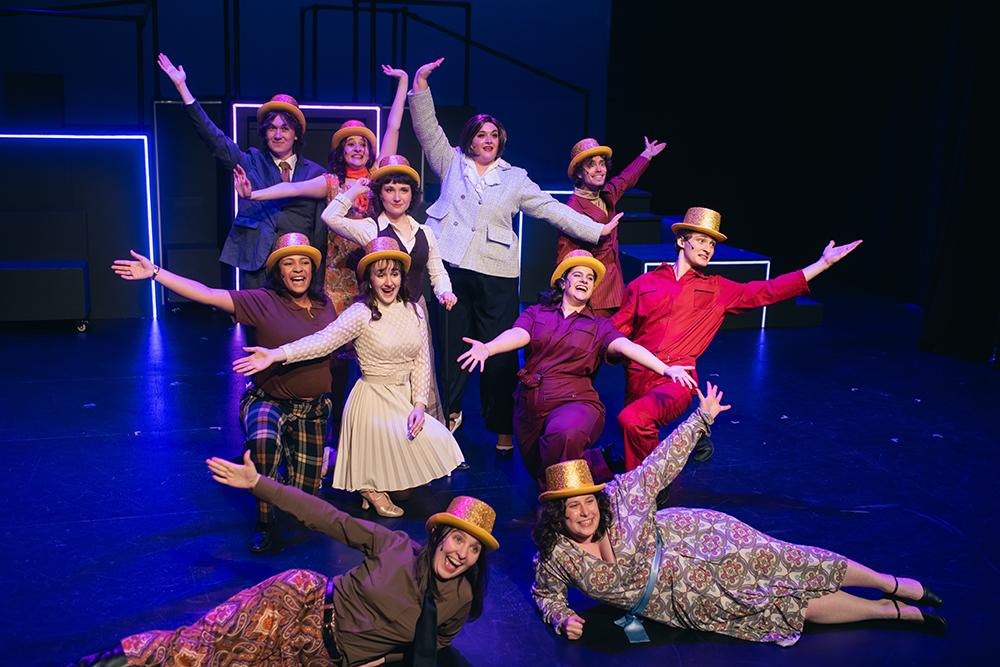 When I started thinking about Company after it was officially chosen last spring, I was particularly interested in how the meaning of this show has shifted since it was first produced in 1970. The original, a concept musical without a linear narrative, was largely read as being about the characters and relationships in the story’s married couples, since nontraditional structures were still unfamiliar in musical theatre. When the show was revived on Broadway in the early 2000s, audiences more accustomed to unconventional storytelling began to focus on Bobby’s inner life instead. What I find most compelling is that 20 years later, the conversation has shifted again, now centering on who gets to engage in discussions around partnership and marriage, and the journey Bobby takes to investigate these constructs.
How did audiences respond?
The spring musical always draws large, enthusiastic crowds, and Company was no exception. The show is both joyful and complex, and I’m glad it seems like our audiences had that experience.