Faculty
Niko Higgins
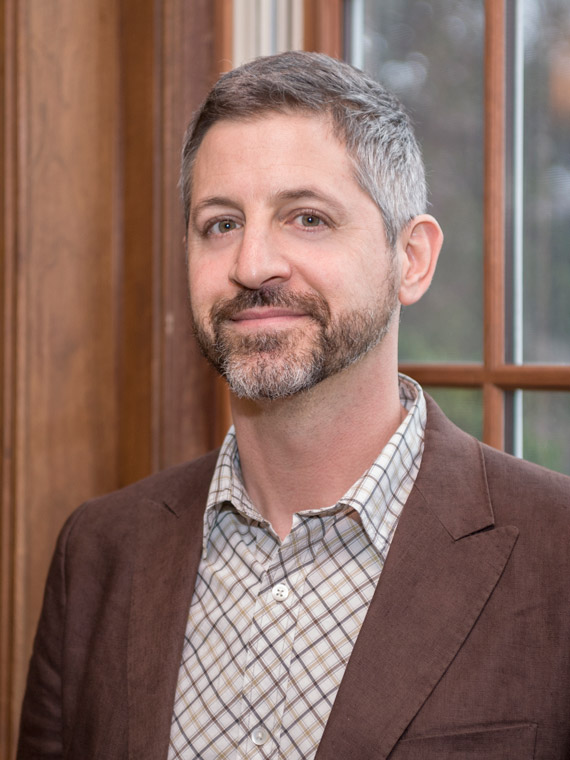
BA, Wesleyan University. MA, MPhil, PhD, Columbia University. Ethnomusicologist and saxophonist. Interests in South Indian classical music and fusion, jazz, world music, improvisation, globalization, cosmopolitanism, sound studies, and ecomusicology. Author of two articles on South Indian fusion and leader and producer of two recordings. Taught at Columbia University, Montclair State University, and The New School. Fulbright and Fulbright Hays recipient. SLC, 2015–
Undergraduate Courses 2026-2027
Music
-
Open, Component—Fall
MUSC 5350
A gamelan angklung is a bronze orchestra that includes four-toned metallophones, gongs, drums, and flutes. Rhythmic patterns played upon the instruments interlock and combine to form large structures of great complexity and beauty. The gamelan angklung that we will play was specially handcrafted in Bali for the College and was named Chandra Buana, or “Moon Earth,” at its dedication on April 16, 2000, in Reisinger Concert Hall. Any interested student may join; no previous experience with music is necessary.
Faculty
- Niko Higgins
- Nyoman Saptanyana
-
By Audition, Component—Fall
MUSC 5359
From highlife and Afrobeat in West Africa to reggae, samba, funk, and contemporary Afro-pop across the African diaspora, the 20th century witnessed an extraordinary expansion of African musical ideas on a global scale. Drawing on deep-rooted rhythmic traditions, musicians in Africa and beyond blended local aesthetics with European, Caribbean, and American influences, creating powerful new genres that continue to shape music worldwide.
This performance course will explore a wide range of African and African diasporic musical styles that emerged during this period and continue to evolve today. The ensemble will focus on playing that emphasizes feel, interaction, and cohesive group coordination, with students learning rhythms, songs, and forms rooted in African traditions and exploring how these elements appear in global styles.
The group will perform clearly structured arrangements drawn from a broad repertoire, with opportunities for genre-appropriate improvisation, soloing, and creative adaptation. A wide range of instruments are welcome, including strings, horns, guitars, keyboards, vocals, drum set, and percussion. Basic facility on one’s instrument is expected, but prior experience with African or world music is not required.
Faculty
-
Open, Component—Fall
MUSC 5274
How do we listen to unfamiliar music? What ideas, principles, and ideologies influence how we hear? What do the sounds of music tell us about society? This course will explore the practice of music theory and the search for musical meaning, with examples from around the world. We will describe unfamiliar music and then understand it using various approaches to translate its meaning. Course themes will include musical and cultural differences, the relativism of musical perception, structuralist approaches to music theory, the politics of representation, decolonizing music history, and others. Course units will draw from varied ethnographic case studies from ethnomusicology and anthropology and may include examples from India, Indonesia, China, East Africa, West Africa, the Caribbean, and North America. Participation in the Balinese Gamelan Angklung Chandra Buana, an Indonesian tonal percussion ensemble, is strongly encouraged. No prior experience in music is necessary.
Faculty
-
Open, Component—Spring
MUSC 5277
How do human voices express our basic, most fundamental needs and desires? How do our voices also provoke immediate feelings and responses? And how do voices become ideologies—such as having or silencing a voice—that then shape the meanings of our voices? In this seminar, we will use these questions to forge a path towards better understanding the role of the human voice in climate justice. We will begin the course with canonical sources that link music with social justice. Then, we will engage recent research from sound studies, voice studies, media studies, vocal anthropology, ecomusicology, and ethnomusicology that reorients the voice and its sonic elements as a dynamically agentive and transformative force intertwined with history and culture. We will then apply our new understanding of the voice to better describe, analyze, and interpret vocal art that enables us to hear a new relationship with our environment. Throughout the semester, we will index a range of approaches, themes, and persuasive strategies of these activist, vocal interventions addressing climate change in order to articulate and clarify the role of music and sound in climate justice. Class topics and themes may include the speech-song continuum, phonetic variation and prosody, Bollywood playback singing, indigeneity and vocality, vocal mimesis, Tuvan throat singing, multivocality, vocal constructions of place and the environment, and others. No prior experience in music is necessary.
Faculty
-
Open, Component—Spring
MUSC 5351
Faso Foli, the name of Sarah Lawrence's West African performance ensemble, is a Malinke phrase that translates loosely as “playing to my father’s home.” In this course, we will develop the ability to play expressive melodies and intricate polyrhythms in a group context, as we recreate the celebrated musical legacy of the West African Mandé Empire. These traditions have been kept alive and vital through creative interpretation and innovation in Africa, the United States, and other parts of the world. Correspondingly, our repertoire will reflect a wide range of expressive practices, both ancient in origin and dynamic in contemporary performance. The instruments we play—balafons, dun dun drums, and djembe hand drums—were constructed for the College in 2006, handcrafted by master builders in Guinea. Relevant instrumental techniques will be taught in the class, and no previous experience with African musical practice is assumed. Any interested student may join.
Faculty
Music History
-
Open, Lecture—Fall
MUHS 2035
How do we listen to unfamiliar music? What ideas, principles, and ideologies influence how we hear? What do the sounds of music tell us about society? This course will explore the practice of music theory and the search for musical meaning, with examples from around the world. We will describe unfamiliar music and then understand it using various approaches to translate its meaning. Course themes will include musical and cultural differences, the relativism of musical perception, structuralist approaches to music theory, the politics of representation, decolonizing music history, and others. Course units will draw from varied ethnographic case studies from ethnomusicology and anthropology and may include examples from India, Indonesia, China, East Africa, West Africa, the Caribbean, and North America. Participation in the Balinese Gamelan Angklung Chandra Buana, an Indonesian tonal percussion ensemble, is strongly encouraged. No prior experience in music is necessary.
Faculty
-
Open, Seminar—Spring
MUHS 3070
How do human voices express our basic, most fundamental needs and desires? How do our voices also provoke immediate feelings and responses? And how do voices become ideologies—such as having or silencing a voice—that then shape the meanings of our voices? In this seminar, we will use these questions to forge a path towards better understanding the role of the human voice in climate justice. We will begin the course with canonical sources that link music with social justice. Then, we will engage recent research from sound studies, voice studies, media studies, vocal anthropology, ecomusicology, and ethnomusicology that reorients the voice and its sonic elements as a dynamically agentive and transformative force intertwined with history and culture. We will then apply our new understanding of the voice to better describe, analyze, and interpret vocal art that enables us to hear a new relationship with our environment. Throughout the semester, we will index a range of approaches, themes, and persuasive strategies of these activist, vocal interventions addressing climate change in order to articulate and clarify the role of music and sound in climate justice. Class topics and themes may include the speech-song continuum, phonetic variation and prosody, Bollywood playback singing, indigeneity and vocality, vocal mimesis, Tuvan throat singing, multivocality, vocal constructions of place and the environment, and others. No prior experience in music is necessary.
Faculty
Previous Courses
Music
-
Open, Component—Spring
MUSC 5272
This course will look at the intersections of music, culture, and nature. We will study how artists and musicians use music and sound to address climate change by surveying important trends in the young field of ecomusicology, such as soundscape studies, environmental musical criticism, acoustic ecology, and animal musicalities. Themes will range from music versus sound and the cultural construction of nature to aurality and the efficacy of sonic activism. Class sessions may include Appalachian coal-mining songs, Indigenous music from the Arctic, art music composition, soundscapes, field recordings, birdsong, soundwalks, and musical responses to environmental crises such as Hurricane Katrina and the nuclear accident in Fukushima, Japan. Participation in the Solkattu Ensemble (Indian vocal percussion) is strongly encouraged. No prior experience in music is necessary.
Faculty
-
Component—Fall
A gamelan angklung is a bronze orchestra that includes four-toned metallophones, gongs, drums, and flutes. Rhythmic patterns played upon the instruments interlock and combine to form large structures of great complexity and beauty. The gamelan angklung that we will play was specially handcrafted in Bali for the College and was named Chandra Buana, or “Moon Earth,” at its dedication on April 16, 2000, in Reisinger Concert Hall. Any interested student may join; no previous experience with music is necessary.
Faculty
- Niko Higgins
- Nyoman Saptanyana
-
Component—Fall
A gamelan angklung is a bronze orchestra that includes four-toned metallophones, gongs, drums, and flutes. Rhythmic patterns played upon the instruments interlock and combine to form large structures of great complexity and beauty. The gamelan angklung that we will play was specially handcrafted in Bali for the College and was named Chandra Buana, or “Moon Earth,” at its dedication on April 16, 2000, in Reisinger Concert Hall. Any interested student may join; no previous experience with music is necessary.
Faculty
- Niko Higgins
- Nyoman Saptanyana
-
Open, Component—Fall
MUSC 5273
This course will examine how music and its global circulation make the relationships between people audible. In the social contexts of listening and musical performance, we will understand how music and its movement across community-based, regional, and national boundaries shape people’s lives. As recordings, musicians, and ideas about music move, we will learn how they sound interpersonal relationships by using selected ethnographic examples of art and popular music from across Asia. Class topics may include Javanese gamelan, South Indian classical music, Japanese taiko, Southeast Asian heavy metal, Iranian pop, brass bands, Japanese hip-hop, Bollywood, music from the Silk Road Project, world jazz, Japanese noise, K-pop, the music of M.I.A., World Music 2.0, and others. Course themes related to the circulation of music will include the ideology of tradition, cultural imperialism, sound technologies, and the more recent proliferation of cultural nationalisms that seek to impede circulation. By encountering musical diversity through listening and reading materials, students will develop the critical thinking skills to make connections between sonic and textual resources and to better understand the many ways in which music and sound are meaningful around the world. Participation in Solkattu, our Indian vocal percussion ensemble, or African Classics, our African popular music ensemble, is strongly encouraged. No prior musical experience is necessary.
Faculty
-
Component—Fall
Solkattu is the practice of spoken rhythmic syllables that constitute the rhythmic basis of many forms of Indian music. In this ensemble, students will develop individualized rhythmic precision and confidence, as well as group solidarity, through the practiced coordination of reciting patterns of syllables while clapping an independent rhythmic cycle. Using the voice and hands, students will internalize rhythmic relationships through physical embodiment by moving to progressively more complex rhythmic patterns and rhythmic cycles. Students with no musical background and musicians specializing in any instrument will benefit from the ensemble—all are welcome. No prior experience in music is necessary.
Faculty
-
Open, Component—Fall
MUSC 5353
Solkattu is the practice of spoken rhythmic syllables that constitute the rhythmic basis of many forms of Indian music. Using our voices, students will learn unique rhythms by progressing through increasingly complex rhythmic patterns and rhythmic cycles. Students will develop individualized rhythmic precision, confidence, and group solidarity through the practiced coordination of reciting patterns of syllables while clapping an independent rhythmic cycle. All are welcome—students with no musical background and musicians specializing in any instrument will benefit from this ensemble. No prior experience in music is necessary.
Faculty
-
Open, Lecture—Spring
This course features the interdisciplinary study of music and culture by focusing on the role of music in social change. Why is music so important to social movements? How is music used to both challenge and support certain ideologies and institutions of power? How have governments used music to build national solidarity, and how have activists used it to incite change? How can we relate these phenomena to our own experiences with music in daily life? We will explore answers to these questions through historical and ethnographic literature about music and learn about the diverse settings in which music and politics intersect. The course presents some theoretical foundations of music, self, and society and then examines music and politics in specific contexts. Class sessions will explore topics such as American spirituals during slavery and emancipation, Islamic political movements in Iran, and the role of music and sound in the Occupy Wall Street and Black Lives Matter movements. We will learn the many ways in which music becomes a resource for modeling the kind of social and political transformations that people hope to create in their communities or nations. Throughout the course, we will listen to and discuss numerous musical examples and gain familiarity with the musical genres that we study. Class sessions will be devoted to discussing readings about music from a wide range of fields, including ethnomusicology, anthropology, history, and sociology. No prior experience in music is necessary. Participation in the Solkattu Ensemble (Indian vocal percussion) is strongly encouraged.
Faculty
-
Component—Spring
Faso Foli is the name of our West African performance ensemble. Faso foli is a Malinke phrase that translates loosely as “playing to my father’s home.” In this class, we will develop the ability to play expressive melodies and intricate polyrhythms in a group context, as we recreate the celebrated musical legacy of the West African Mandé Empire. These traditions have been kept alive and vital through creative interpretation and innovation in Africa, the United States, and other parts of the world. Correspondingly, our repertoire will reflect a wide range of expressive practices, both ancient in origin and dynamic in contemporary performance. The instruments we play—balafons, dun dun drums, and djembe hand drums—were constructed for the College in 2006, handcrafted by master builders in Guinea. Relevant instrumental techniques will be taught in the class, and no previous experience with African musical practice is assumed. Any interested student may join.
Faculty
-
Component—Spring
Faso Foli is the name of our West African performance ensemble. Faso foli is a Malinke phrase that translates loosely as “playing to my father’s home.” In this class, we will develop the ability to play expressive melodies and intricate polyrhythms in a group context, as we recreate the celebrated musical legacy of the West African Mandé Empire. These traditions have been kept alive and vital through creative interpretation and innovation in Africa, the United States, and other parts of the world. Correspondingly, our repertoire will reflect a wide range of expressive practices, both ancient in origin and dynamic in contemporary performance. The instruments we play—balafons, dun dun drums, and djembe hand drums—were constructed for the College in 2006, handcrafted by master builders in Guinea. Relevant instrumental techniques will be taught in the class, and no previous experience with African musical practice is assumed. Any interested student may join.
Faculty
Music History
-
Open, Lecture—Fall
MUHS 2034
This course will explore the relationship of listening, music, and sound across different cultural and historical contexts. Recent scholarship on listening and sound has revealed how listening plays a crucial role in the formulation of theories about music, and we will study how various ideas about listening inform contemporary understandings of music and sound. Drawing from research from the field of sound studies, cultural theory, and ethnographic case studies from ethnomusicology and anthropology, we will understand key concepts of listening with specific musical and sonic examples. Course units may include technologies of listening, listening as an impetus for empathy and to stimulate political action, strategies for listening to cultural and musical difference, and music and sound as tools for torture and healing. Individual class sessions may include sound technologies such as the phonograph, the MP3, the recording studio, and AI; soundscapes; music therapy; and the listening contexts of individual genres, such as South African pop, Buddhist chant, Arabic maqamat, lofi hip hop, muzak, and EDM. Participation in either African Classics or the Balinese Gamelan Chandra Buana is strongly encouraged. No prior music experience is necessary.
Faculty
-
Open, Seminar—Spring
MUHS 3033
This seminar will focus on the widely practiced creative process of musical improvisation. Using footage of live performances, reading and listening assignments, and class discussions, we will learn to hear and understand improvisation as an array of specific choices as musicians from different backgrounds progress through their performances. We will question how personal expression and cultural context shape creativity, which will reveal improvisation as an intrinsic form of adaptation that is essential to artistic expression, communication, and survival. Using a cross-cultural perspective, we will examine the similarities and differences of musical improvisation around the world, exploring themes such as freedom, community, free will, determinism, social justice, ethnicity, race, nationalism, class, gender, and sexuality. Using ethnomusicology’s interdisciplinary approach to learning about music and culture, this seminar will draw from anthropology, linguistics, social theory, sociology, psychology, and artists’ personal accounts. Class topics may include music in Turkey, Egypt, West Africa, India, Cantonese opera, 20th-century experimental art music, improvised singing games in Nepal, free improvisation, international and American jazz, and turn tabling and DJing. Participation in the Faso Foli, SLC’s African percussion ensemble, is strongly encouraged. No prior experience in music is necessary.
Faculty
-