MFA Programs
Leah Umansky, MFA ’04
Leah Umansky is a writer, educator, artist and the author of two forthcoming books, the memoir, Delicate Machine (Dzanc Books, 2027), and the forthcoming collection, Ordinary Splendor (Etruscan Press, 2028). Her most recent collection is Of Tyrant (Word Works Books, 2024). She earned her MFA in Poetry at Sarah Lawrence College and has curated and hosted The COUPLET Reading Series in NYC since 2011. She is the creator of the STAY BRAVE Substack which encourages women-identifying creatives to inspire other women-identifying creatives to stay brave in their creative pursuits. Her creative work has been featured on PBS and The Slowdown Podcast, and in such places as The New York Times, The Academy of American Poets’ Poem-A Day, POETRY, The Nation, and American Poetry Review. She is an educator and writing coach who has taught workshops to all ages at such places as The Guggenheim, The New York Public Library, Poetry School London, Poets House, Memorial Sloan Kettering and elsewhere. She lives in Brooklyn, NY.
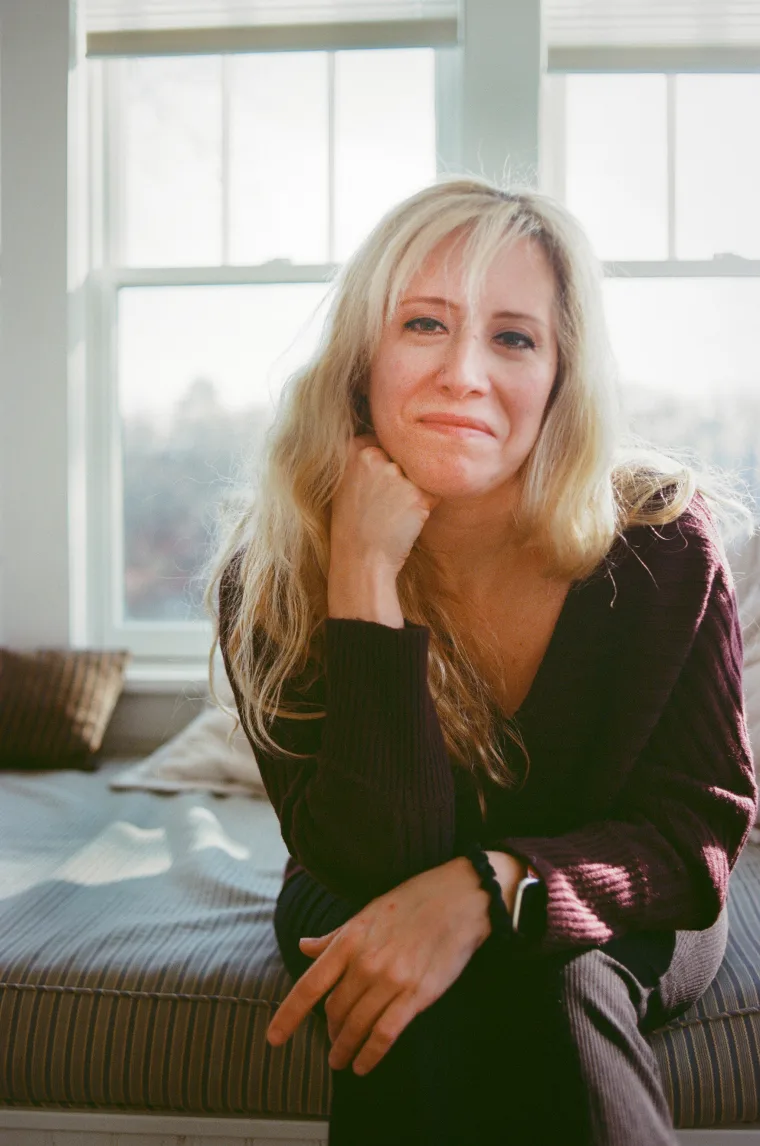
I love being in a community of any kind—it gives me hope; it gives me life; it inspires me. So much of what you see, what you do in a day, what you read inspires you. You just never know when it will hit.
Can you tell us a little bit about your path to the MFA? What did your life look like before applying?
I’m one of those crazy people who went right from undergrad at SUNY-Binghamton right into my MFA at Sarah Lawrence. I was the first in my family to go to college, and that was a lot of pressure for me, but it was also really exciting. It was thrilling to know I loved something—reading literature and writing poetry. I knew poetry was the path I wanted to follow but wasn’t sure if I’d go into higher education or secondary education.
In my sophomore year at Binghamton, Liz Rosenberg assigned us Marie Howe’s What the Living Do in her poetry workshop and that was it! I knew I wanted to study with Marie and knew she taught at Sarah Lawrence College, which wasn’t too far from where I grew up.
I applied to a few other MFA programs, mostly in NY, two out of state, and was actually waitlisted at SLC. When I got off the waitlist, I was very excited to become an MFA candidate. I didn’t have much guidance about programs or about what it would do for my life or career, what that debt would do to my life; I wish I had had more advice on that. I just knew I got in and what if this opportunity didn’ t come again? That being said, that year, in 2002, I was one of the only graduate students in the Poetry program who was right out of college, and one of the only ones under 40 years old. I was 22! It was a bit daunting to say the least.
Why did you choose Sarah Lawrence?
I chose Sarah Lawrence because of the faculty and because of its reputation.Who or what influenced you most during your time in the program? Was there a professor, mentor, or class that was particularly impactful?
I’m very grateful to still have relationships with many of the professors I had at Sarah Lawrence. Working with Marie was a gift, but I only had her class for one semester. Our one- on-one time together was really eye-opening. I also truly loved working with Victoria Redel and enjoyed building a relationship with her. Her breadth in writing really inspired me. I also had the opportunity to work with Paul Lisicky, in his fiction undergrad class as an elective and enjoyed seeing literature through his eyes. He introduced me to writers like Kathryn Davis, who reinforced for me how dynamic and inventive fiction can be.
With that said, the most important professor in my time at SLC was Kate Knapp Johnson. I am so grateful for all the time she made for me and the way she believed in my work. I felt very alone as a young poet in those days. Kate was not only my main thesis advisor, but a true mentor to me in my MFA. Her guidance, her feedback, and her friendship meant the world to me, and still does.
Do you have any advice for current or prospective students?
I love this question. Never stop asking for advice. Ask yourself: Is doing an MFA at Sarah Lawrence, something you’ll regret not doing if you turn it down? I think that’s the advice I gave myself.
I’d also encourage any students to one, seek out your literary heroes, contact them, see them read, write them letters, and go to book events; and keep in touch with the teachers you’ve previously had. Maintain those relationships—they will enrich your life in ways you may not know yet.
I would also say, seek out your own community of writers. Sadly, I didn’t have time for that at SLC. I needed to work as soon as I graduated undergrad. I was working three days a week in publishing in Manhattan and commuting from Long Island to SLC two days a week. I feel like I missed out on all of that community that I had as an undergrad at Binghamton. Post-MFA, I had to seek it out myself and nurture it.
What does your post-MFA life look like?
I love the life I’ve created post-MFA, but it took time, attention and effort. I’m proud of how much poetry I surround my days with. I’ve been teaching high school English for the last 20 years and am lucky to say that poetry is embedded in many of the days of my work week whether it’s teaching poetry workshops to my high schoolers, mentoring students on the school literary magazine, writing my own poetry, or going to readings myself. Teaching contemporary poets, or any poetry at all, can change a student’s life. It changed mine as a student, and I’m always glad to pay it forward.
Professionally, I’ve written six books of poems and have a memoir coming out in 2027. I’ve been the Host and Curator of The Couplet Reading Series since 2011. We just celebrated our 15th anniversary—a big achievement for these times we’re living in post-COVID!
I teach many online and in-person poetry workshops to students of all ages and really enjoy connecting with and mentoring other writers. I love fostering a sense of community and creativity in others.
For over ten years, I took poetry workshops at the New School with Patricia Carlin, and her mentorship and eye was invaluable to my life as a poet and a writer. My confidence as a writer and a literary citizen came from the people I met in those years of my life.
How do you find yourself engaging with the literary world these days?
I think I answered this above, but I can add that I love social media. It’s a blessing and a curse, (such a time suck), but I love interacting with creative people from all around the world online. I love being introduced to new poems and new poets. I love Substacks and newsletters and all the different poem-a-days out there—even if I don’t get to read them all the time. I love poetry podcasts like Poetry Unbound and The Slowdown for the small bursts of poetry they influence my life with. I love being in a community of any kind—it gives me hope; it gives me life; it inspires me. So much of what you see, what you do in a day, what you read inspires you. You just never know when it will hit. I think all of the engagement you have with the world is mostly for the best.Where can we find your work?
www.leahumansky.com
I have poems coming out later this year in Image Journal, Cincinnati Review, and Tahoma Literary Review.