MFA Programs
Max Halper, MFA ’19
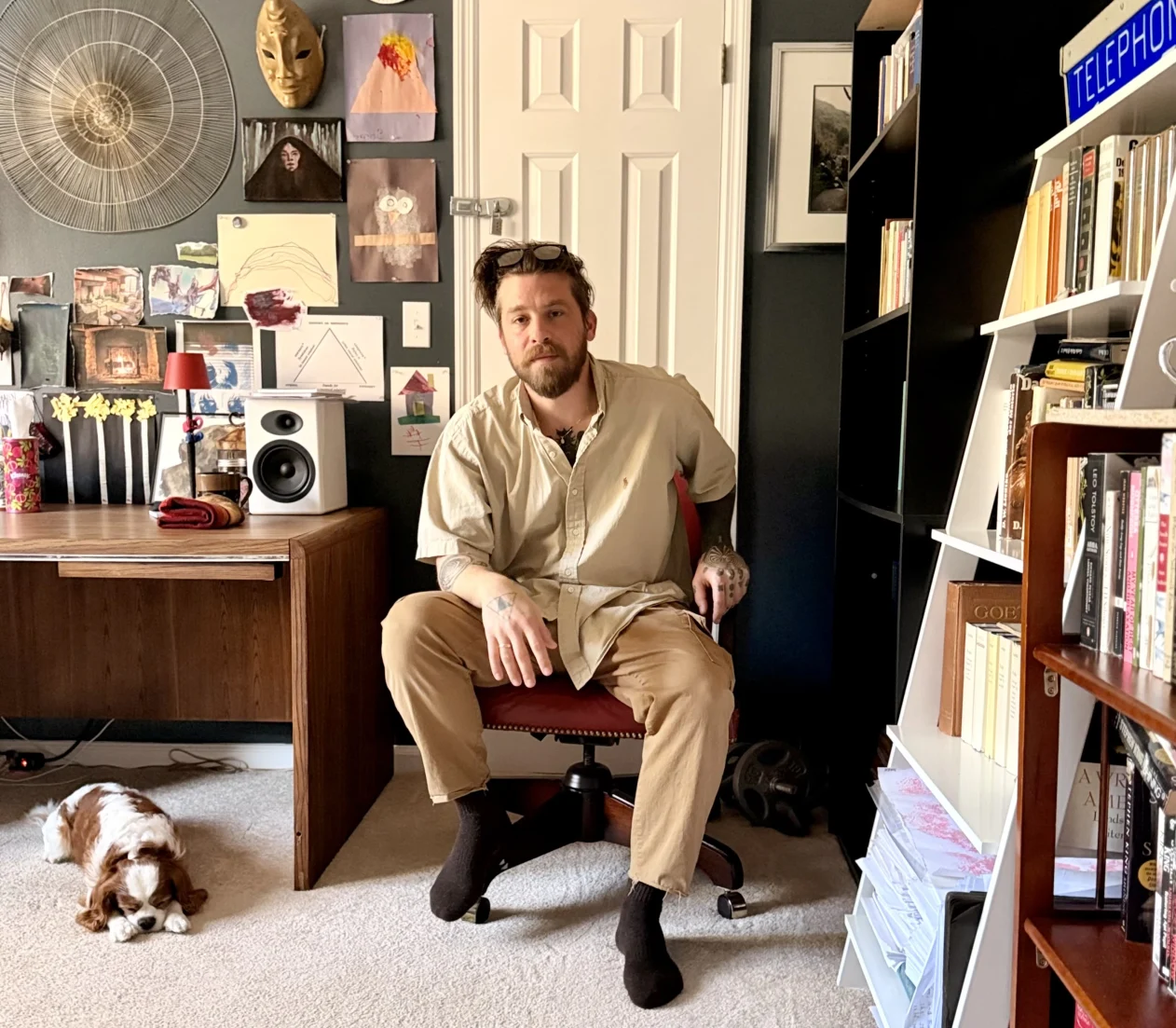
Max Halper is a novelist, short story writer, essayist, screenwriter and educator originally from New York City. He holds a BA from Hampshire College and an MFA in fiction from Sarah Lawrence College. He is the author of two novels, most recently Year of the Mountain (Apocalypse Confidential, 2026), and two novellas, most recently That Foul Revolt (Subtle Body Press, 2026). His short fiction and nonfiction have appeared in Juked, The Southampton Review, North Dakota Quarterly, X-R-A-Y, Post Road, Barrelhouse and elsewhere. He teaches creative writing and lives in Putnam Valley, NY, with his wife, son and daughter.
Can you tell us a little bit about your path to the MFA? What did your life look like before applying?
Growing up, things would just hit me as inexplicably excruciatingly important. A light in an apartment window, or the woods off the highway. I would close myself in bathrooms at high school parties to write meandering sentences about elevators and thunder. But I didn’t really know what to do with this, and for a long time I danced around pursuing writing seriously. I studied comp lit in undergrad. After college I went to Columbia to study philosophy but dropped out my second year. Then I drifted for a while, and struggled pretty deeply with alcohol. Part of recovering involved learning how to structure my time and attention better, so I finally committed to formalizing my writing habit. Applying to MFA programs was part of that.Why did you choose Sarah Lawrence?
I applied to two schools, because they were the ones I was aware of: UMass Amherst and Sarah Lawrence. I never heard back from UMass. Sometimes chance makes the right decision for you.Who or what influenced you most during your time in the program? Was there a professor, mentor, or class that was particularly impactful?
I’ll shout out my thesis advisor, David Ryan, who pushed me to start submitting for publication while I was still in the program, which helped acclimate me to rejection. And of course David Hollander, who in the years since I graduated has become a dear friend and constant collaborator.
Do you have any advice for current or prospective students?
Outside of the MFA program, writing tends to be very lonely, and external validation is scarce. Most people will stop writing altogether in the years following graduation, because the silence feels like an indictment of their talent, maybe even a refutation of them. So as you develop your craft in this intensive environment, spend a bit of time also developing your own reasons for doing it, ones that don’t depend on other people. And ask your professors about theirs.
What does your post-MFA life look like?
I’ve been lucky to get to spend my time writing and doing writing-adjacent stuff. Teaching is a joy. I’m trying to get better at sleeping. My son and I are building a footbridge over the creek behind our house.
How do you find yourself engaging with the literary world these days?
Isn’t that just the world? Generally I’m interested in systems of intimacy and violence. Right now I’m fixated on things covered in kudzu. I’ve been toying around with a scene in which two people take turns crying in a very ritualized, transactional way. I’ve been trying to write a poem for thirty years but I can’t figure out how poetry works. A friend handed me The Temple of Iconoclasts by J. Rodolfo Wilcock. I’m always rereading Kleist. My students’ work has become my new favorite place to mine for inspiration.
Where can we find your work?
Are there any current or upcoming projects you're excited to share with us?
I’m publisher-shopping for a new novel, about a man who can’t die. I’m also gearing up to direct my first feature. We’ll see.