MFA Programs
Aaron Tillman, MFA ’98
Aaron Tillman (MFA in Fiction Writing, 1998) is the Associate Director of the Writing Program at University of Massachusetts Amherst. His debut novel, Lucy Miles’ Photogenic Mind, will be published by Regal House Publishing on November 17, 2026. He is the author of two short story collections, Consolation Miracles and Every Single Bone in My Brain, and a book of critical nonfiction, Magical American Jew. He received the Gival Press Short Story Award, the John Gardner Memorial Prize in Fiction from Harpur Palate, a Short Story Award for New Writers from Glimmer Train Stories, and his work has been nominated for the Pushcart Prize. His stories have appeared in Mississippi Review, Pembroke Magazine, Narrative Magazine, upstreet, Sou’wester, and elsewhere. He has recorded stories for radio broadcast, and his essays and reviews have appeared in The Writer’s Chronicle, Colorado Review, Studies in American Humor, Symbolism, The CEA Critic, and The Intersection of Fantasy and Native America. He can be found online at aarontillmanfiction.com.
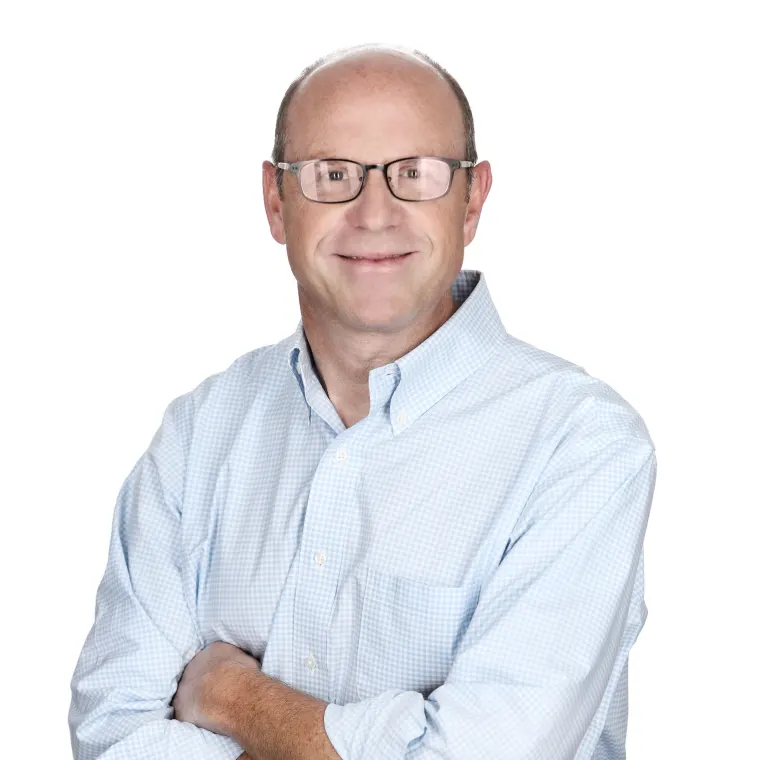
Now more than ever, human writing matters, and we should all be determined to keep supporting each other and keep at it ourselves.
Can you tell us a little bit about your path to the MFA? What did your life look like before applying?
After graduating from college, I lived in an A-frame cabin on the Ausable river in the Adirondack region of upstate, NY. It was beautiful and intoxicating and isolating and creatively fruitful. I had a few friends and a foster cat named Dinkwad. By day, my cabin mate and I waited tables in Lake Placid, and by night, we drove back to Jay, NY, where we stoked our wood stove until we could feel our feet—in my memory, it’s always winter—drank fat bottles of cheap wine and talked about trout psychology (among other fish philosophies). When I was alone, I read as much as I could and wrote stories about nameless characters riddled with anxiety or restaurant servers waiting on tables of nameless characters who were riddled with anxiety. All set in Lake Placid, not that anyone ever left the restaurant. Despite the ostensibly inane nature of the stories I was writing, I couldn’t deny the urge to read and write more, to create something original. Or something someone else might want to read. I realized that in order for me to develop as a writer, I needed to find a larger community of writers, and that’s when I started sending out MFA applications.
Why did you choose Sarah Lawrence?
When I drove downstate to visit SLC, I sat in on a workshop and my mind lit up. I wanted to stay there forever, even tucked inside some closet in Slonim, as long as I was close to this community of writers who understood something essential about our impractical pursuits. I felt this was a place where I might find some direction and my nameless characters might find some names. Or internal lives. I also loved how nurturing SLCseemed to be, especially having heard horror stories of programs that flaunted competition. And after a year in Jay, NY, the proximity to NYC was very exciting to me. When I got home after my visit, I wrote a poem on the back of a slab of birch bark and mailed it to Lindsey Abrams who was the director of the MFA in Fiction Writing at the time. I never heard back, but eventually I did get in! Maybe on the strength of my anxious waiter stories. Or maybe as a way to stop me from sending any more tree rubbish.
Who or what influenced you most during your time in the program? Was there a professor, mentor, or class that was particularly impactful?
Joan Silber and Myra Goldberg were both tremendous influences, and Marie Howe and Thomas Lux were influences from afar. Lux, in particular, captured my imagination. I not only read his books and saw him read, but he played softball with us (poets vs. prosers), and I marveled at his cadence and the passion he had for poetry and the serious way he spoke about our beautifully brutal world. But more than anyone or anything, my classmates really inspired me, often blowing me away with their innovative ideas, layered writing, and conscientious critiques. By sheer example, David Hollander taught me how to read and provide feedback. When I got my first story back in my very first workshop, which I seriously considered skipping because I was so convinced I had offended everyone in the class with my sheer buffoonery, I found myself in a workshop of individuals who spoke about the story as if it mattered. (Forever grateful for that.) When the stories were returned to me (all hard copies at the time), David had written nearly two pages of detailed notes, and I understood what it meant to be in a workshop. I had a responsibility to provide the same attention and honesty and specificity that he had provided for me. Along with Hollander, I was incredibly lucky to go to SLC at the same time as so many talented and generous writers, including Jimin Han, Stewart Engesser, Patricia Dunn, Laura Schmitt, Jocelyn Cox, Laura Minor, Patrick Rosal, Curtis Bauer, Ross Gay, Margaret Parker, Jen Gregory, Mike Gregory, and many others (I know I left names out, and I’m sorry about that). But it felt special at the time, and that feeling has only solidified.
Do you have any advice for current or prospective students?
Be the best literary citizen you can be. Support your fellow writers. Don’t succumb to any of the petty jealousies that can pass through creative writing programs. If someone does something well, let them know it. If someone finds “success” of any sort, celebrate that genuinely. Someone else’s success only inspires and opens doors. Stay as present as possible. Cherish and contribute to your writing community. Take advantage of every opportunity you can, whether it’s on a campus or in your hometown. If there are chances to read, sign up. If there are opportunities to see someone else read, get there. And for prospective students, think about community and what environment will enable your writing and your writing relationships to grow. For me, it was SLC!
What does your post-MFA life look like?
Since the post MFA period has been nearly 30 years, I’ll provide the quick and dirty version. Directly after the MFA, I landed some adjunct teaching positions and an editorial internship. I was not very good at the editing gig. It made me sleepy. But it was useful to know what fed and energized me and what didn’t.After four years of living in New York and working as an adjunct—writing as much as I could and clinging to the literary network I had developed at SLC—I moved to San Francisco and found a full-time job teaching at a two-year college. I did that for three years before moving to Boston, where I eventually started working toward a PhD in English. During the PhD period, I began writing more critical nonfiction, but I was essentially studying my literary and cultural heroes and absorbing a lot. Once I earned my PhD, I got a full-time job at Newbury College in Brookline, MA. While there, I brought in as many creative writers as I could—basically anyone who would come for free—until the college closed in 2019. But one of those experiences led to an introduction to Jeffrey Condran, one of the founders of Braddock Avenue Books, and BAB ended up publishing my first collection of short stories, Every Single Bone in My Brain. Just for context, I graduated SLC in 1998 and my first book of fiction came out in 2017. I hope that doesn’t frighten anyone, but the time went by quickly; I kept writing and reading and providing feedback for friends. I was improving my craft because I kept at it. About five years later, my second collection of short fiction, Consolation Miracles, came out from a press that had previously published one of my short stories. And a few years after that, my first novel was accepted by Regal House Publishing, and it will be coming out on November 17, 2026. I realized after my MFA that the work of a writer comes in many forms. If you’re reading, writing, and thinking about literature and language, you’re doing the work of a writer. Your brain is soaking up ideas and voices and sensory descriptions, even if they’re temporarily tucked inside one of the Slonim closets in your mind. They’ll emerge eventually. The assignment is to keep going, keep getting better, keep trying things out. With persistence and a little luck, you’ll find your readers, whether they’re in living rooms or cafes or bars where you meet up to talk or in the pages of a magazine or a book or a substack or an online journal. Now more than ever, human writing matters, and we should all be determined to keep supporting each other and keep at it ourselves.
How do you find yourself engaging with the literary world these days?
Both directly and vicariously. I’m currently teaching at the University of Massachusetts Amherst, and though I’m in the general education Writing program, I run a practicum on the teaching of writing for graduate student instructors, many of whom are in the MFA program at UMass. Through current MFA students, I learn about events, talk about their work, and wax nostalgic about my time in Bronxville. I also live in Boston and commute to Amherst, which is about two hours each way, so I consume a lot of literature through audio. It’s amazing how immersive and engaging audio books can be for me. When a novel and a narrator are dynamic, I am entirely swept up, and the drive flies by. Many times, I stay in my car after I arrive, so I can finish listening to a scene or a chapter. And when I walk from the parking lot to my office, I feel as though I’m reemerging from another world. It can be surreal, especially if I was listening to historical or fantastical fiction. Beyond that, I write reviews and an increasing number of blurbs, and when friends and acquaintances post their work on social media, I try to read and comment on everything I can. For many writers, especially those of us who have published with independent presses, social media is a primary method of spreading the word. At the moment, I am my only publicist. But whatever the circumstances, I want to remain the good literary citizen that I learned to be at SLC. I try to attend literary events in the Boston area and grab coffee and beer with writing and reading friends as often as I can. Food and drinks with friends are occupational benefits!
Where can we find your work?
Thanks so much for asking and for the opportunity to respond to such thoughtful questions! My debut novel, LUCY MILES’ PHOTOGENIC MIND, is coming out from Regal House Publishing on November 17, 2026. It is available from the press, Bookshop.org, Barnes & Noble, Amazon, or wherever you order your books. But when in doubt, you can always go to my website: aarontillmanfiction.com. It’s not pretty, but it is functional and has information about where to find my work and where to find me!
Are there any current or upcoming projects you're excited to share with us?
I recently completed a novel-in-stories, and I’m hoping it finds its way into the wider world, but I haven’t really sent it out yet. The book is set in and around the Wyoming Valley of northeastern Pennsylvania (NePA), where I was raised. This novel-in-stories has also inspired a deeper interest in this area. I recently started working on another novel set in Wilkes-Barre, PA. This one takes place in 1972 (the year I was born), before, during, and after the Susquehanna River flooded Wilkes-Barre (including the apartment where my parents lived with my older brother and me). I spent a large portion of my early literary life writing about places like New York and San Francisco and Boston—places I thought were sexier settings to write about—but I was essentially denying the place that helped to shape me (for better or worse). I think the time has finally come to change that.