Episode 1
Jasper Soloff ’17

Search sarahlawrence.edu
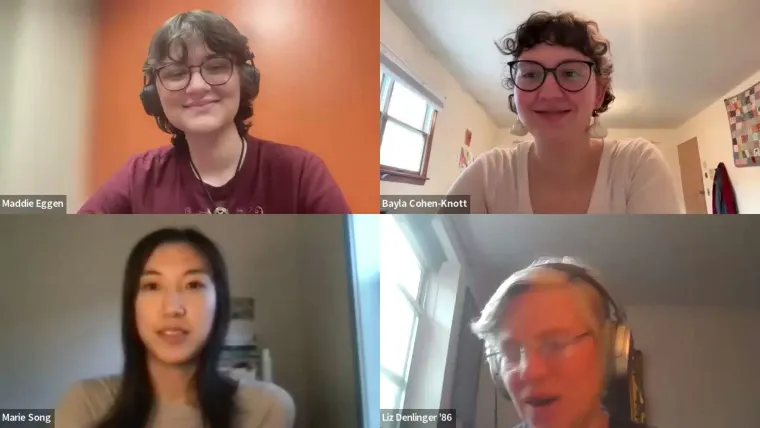
Elizabeth (Liz) Delinger, class of ’86, is joined in conversation by Maddie Eggan ’25, Marie Song ’25, and Bayla Cohen-Knott ’27. Liz works at the New York Public Library as the curator of the Library’s collection of British Romantic literature. Liz discusses the importance of libraries in our society and her surprising-to-herself career path, as well as the skills that have mattered most to her and what’s really the most important of all: the people.
The overall themes of this conversation center around the unpredictable nature of career development, the societal importance of libraries, and the personal growth that comes from post-college experiences. Liz Denlinger openly discusses how her career path into library curation was shaped more by chance and adaptability than by rigid planning, emphasizing that professional journeys often evolve organically.Throughout, there is also a strong thread about how a Sarah Lawrence education, while unconventional, prepared Liz emotionally and intellectually to navigate the real world, listen to others, and build a meaningful career rooted in service, literature, and advocacy.
One of the main strengths of this conversation was Liz’s candid and honest tone, which made her experiences relatable and accessible to the audience. She didn’t present a polished or overly idealized version of her career but instead shared her fears, missteps, and the lessons she learned through trial and error. Another strength was the depth and thoughtfulness of the students' questions, which guided the conversation into meaningful discussions about not just career logistics, but emotional resilience and societal impact.
I would recommend this conversation to a friend because it offers a refreshing and realistic view of what career building can actually look like, especially for those feeling uncertain about their futures. Liz’s story dismantles the myth that you need to have everything figured out after college, showing that adaptability, persistence, and relationships matter more than having a rigid plan. Additionally, the conversation gives important insights into the role libraries play in supporting democracy and social equity, which could inspire anyone interested in public service, advocacy, or community work. The practical advice Liz offers about writing, networking, and approaching professional life with openness makes this interview not only inspiring but genuinely useful for anyone about to enter the workforce.