Faculty
Rattawut Lapcharoensap
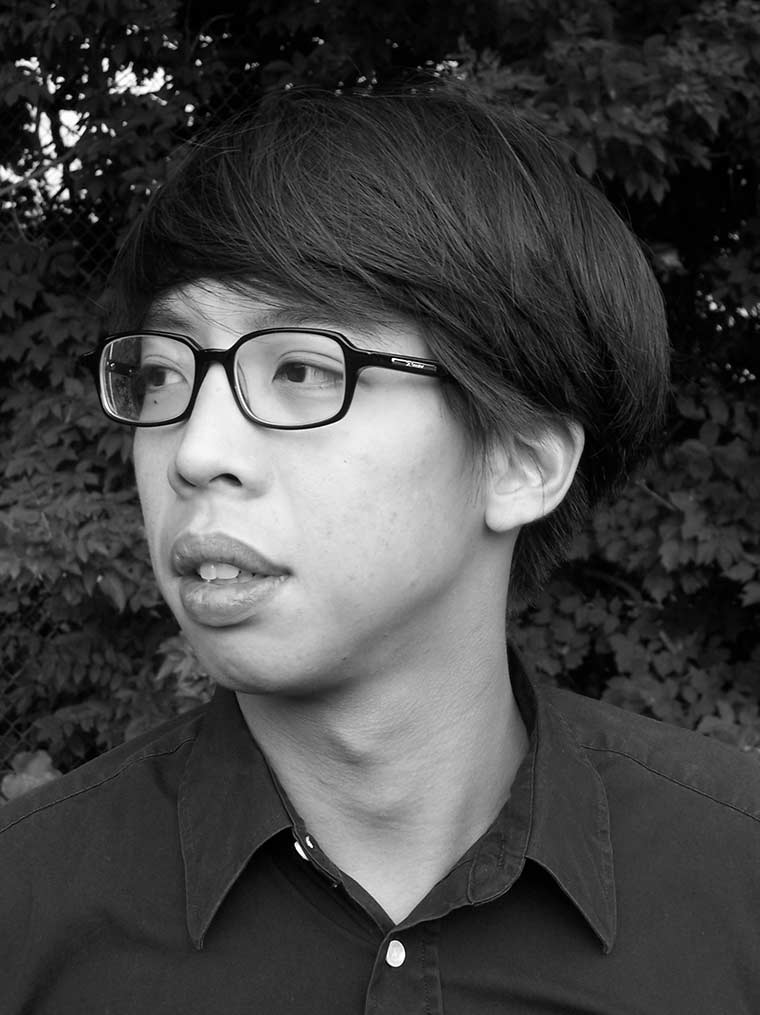
Rattawut Lapcharoensap
BA, Cornell University. MFA, University of Michigan. Fiction writer. Author of Sightseeing, a collection of short stories, which received the Asian American Literary Award and was shortlisted for the Guardian First Book Award. His work has appeared in Granta, One Story, The Guardian, Zoetrope, Best New American Voices, and Best American Non-Required Reading, among others. He is a recipient of a Whiting Writer’s Award, a DAAD Artist-in-Berlin fellowship, a National Book Foundation 5 Under 35 honor, and an Abraham Woursell Prize through the University of Vienna; he was named by Granta magazine to its list of “Best of Young American Novelists.” SLC, 2018–
Undergraduate Courses 2026-2027
Writing
-
Open, Seminar—Fall
WRIT 3352
This fiction workshop seeks to draw inspiration in both our reading and writing from the work of Asian American writers. In addition to coming together to support one another in a writing workshop environment—discussing matters of “craft,” “technique,” and the like—we will also spend our time discussing questions about race, immigration, nationality, and storytelling (in addition to any other questions) as they arise through the fiction of Asian American writers. We will begin with Sui Sin Far (Edith Eaton) and work our way “forward” to a reading list that may include Maxine Hong Kingston, Frank Chin, Shawn Wong, Hisaye Yamamoto, Theresa Hak Kyung Cha, Lois-Ann Yamanaka, Jessica Hagedorn, R. Zamora Linmark, Amy Tan, Don Lee, Anthony Veasna So, Ocean Vuong, Julie Otsuka, David Wong Louie, K-Ming Chang, Nam Le, Chang-Rae Lee, Gish Jen, Jhumpa Lahiri, Bharati Mukherjee, Akhil Sharma, Paul Yoon, Jenny Zhang, Viet Thanh Nguyen, Lan Samantha Chang, and Ayad Akhtar, among others. To be clear, this is a writing course and not a critical survey of Asian American literature and literary history—at least not in the manner that my colleagues in the literature program might be able to provide. Nevertheless, Asian American fiction will constitute the common source material from which, I hope, students might derive their pleasures (and lessons) as aspiring fiction writers regardless of their chosen subjects. In addition to actively participating in class discussions and providing their peers with constructive feedback for their work, students will be expected by the end of the semester to develop and produce—through the conference system—a portfolio of short fiction.
Faculty
-
Intermediate, Seminar—Spring
WRIT 3323
Prerequisite: at least two prior writing courses
This writing workshop will examine the art of revising fiction. What do we talk about when we talk about revision? What do writers do when they revise? What, for that matter, is revision? This course has been designed with these seemingly simple questions in mind. Most weeks, students will read an example of a revision from a published writer, complete (and prepare to discuss) a short revision exercise, and workshop revisions of student work. My hope is that our workshops and discussions will provide each of you with some concrete tools, strategies, and conceptual frameworks for your revisions; it is also my hope that we might be able to generate collective excitement about the possibilities of the practice. Students must have completed drafts of work from prior writing courses that they wish to revise in this course.
Faculty
Graduate Courses 2026-2027
Master of Fine Arts in Writing
-
Seminar—Fall
WRIT 7306
“[O]ne’s plan, alas, is one thing and one’s result another,” Henry James says in the New York edition preface to The Wings of the Dove. We will try to think about what James calls, in that preface, “the gaps and the lapses” in our work, “the intentions that, with the best will in the world, were not to fructify,” “the absent values, the palpable voids, the missing links, the mocking shadows” that necessarily haunt any early draft, and our subsequent attempts to exorcize those specters. We will do this primarily by workshopping early drafts of student work alongside revisions of that work, examining the concrete way that each revision meets or fails to meet (or even re-conceptualizes entirely) the ambitions and requirements of its earlier incarnation.
Our assumption will be that most drafts—especially early ones—are largely failures, pocked with the Jamesian voids and lacunae mentioned above. Anyone can fail in this manner, of course—anybody can produce a disastrous first draft—but few are capable of failing (to use Samuel Beckett’s oft-quoted injunction) better. This course aims to provide you with the tools and the strategies to do so.
Faculty
-
Seminar—Spring
WRIT 7306
Human nature is flawed, so it would be surprising if the only people we come across in this world were to be the righteous. Those who think the task of literature is to extract a “pearl” from a gang of villains is to deny its very essence…[h]owever degrading he may find it, [the writer] has no choice but to overcome his squeamishness and soil his imagination with the filth of life… —Anton Chekhov to Maria Kiselyova, 14 January 1887
I kept being virtuous, and virtuous in ways that were destroying me. And when I let the repellent in, I found that I was alive on my own terms. —Philip Roth, on his early work, to Saul Bellow
For the drama to deepen, we must see the loneliness of the monster and the cunning of the innocent. —Vivian Gornick, The Situation and the Story
In addition to coming together to support one another through workshopping, our readings will be structured around thinking about the uses of antagonists in fiction—of representations of the evil, the malign, the morally errant; of the criminal and criminalized; of the poetry of “bad behavior” (to use the title of Mary Gaitskill’s first story collection); of the repellent, the antisocial, the deviant. We will examine fiction from writers that may include Anton Chekhov, Grace Paley, Flannery O’Connor, Leonard Michaels, Mary Gaitskill, Kate Braverman, Edward P. Jones, Iris Owens, Haruki Murakami, Dorothy Baker, Otessa Moshfegh, Garth Greenwell, Joyce Carol Oates, Philip Roth, William Gay, and Tove Ditlevsen, among others. While students need not submit work with such emphases, the readings have been selected in the hopes of conducting a semester-long conversation about antagonists and moral complexity in fiction.
Faculty
Previous Courses
Master of Fine Arts in Writing
-
Seminar—Spring
WRIT 7306
Human nature is flawed, so it would be surprising if the only people we would come across in this world were the righteous. Those who think the task of literature is to extract a “pearl” from a gang of villains is to deny its very essence.... To limit its functions to nothing but the extraction of “pearls” would threaten its very existence as much as insisting that, when Levitan paints a tree, he should ignore its inconveniently grubby bark or its yellowing leaves…. In for a penny, in for a pound: However degrading he may find it, [the writer] has no choice but to overcome his squeamishness and soil his imagination with the filth of life…. The writer is no different from your average newspaper reporter. How would you regard a reporter who, from misplaced delicacy or a willingness to pander to his readers, never wrote about anyone but honest burghers, idealistic ladies or virtuous railwaymen?
To the chemist, there is no such thing on this earth as an impure substance. The writer must be as objective as a chemist. He must turn his back on the subjective preferences of the world and recognize that dung heaps have a useful role to play in the countryside, that ignoble passions are every bit as much a part of life as noble ones.—Anton Chekhov to Maria Kiselyova, 14 January 1887
“The death of Satan was a tragedy / For the imagination. A capital / Negation destroyed him in his tenement / And, with him, many blue phenomena,” claims the speaker of Wallace Stevens’s “Esthetique du Mal.” In addition to coming together to support one another through workshopping, the readings in this workshop will be structured around thinking about the uses of the antagonist in fiction—of representations of the evil, the malign, the morally errant; of the criminal and criminalized; of the poetry of “bad behavior” (to use the title of Mary Gaitskill’s first story collection); of the repellent, the antisocial; of the “blue phenomena” available to writers through such examinations. We will begin with essays from Agnes Callard, Charles Baxter, and Maggie Nelson before turning our attention to examples of the antagonist in fiction from writers that may include Chekhov, Grace Paley, Flannery O’Connor, Leonard Michaels, Mary Gaitskill, Kate Braverman, Edward P. Jones, Iris Owens, Haruki Murakami, Dorothy Baker, Otessa Moshfegh, Garth Greenwell, Joyce Carol Oates, Philip Roth, William Gay, and Tove Ditlevsen, among others. While students need not submit work with such emphases—everybody is encouraged to submit whatever work they imagine would be most useful to receive feedback about—the readings have been selected in the hopes of conducting a semester-long conversation about antagonists and moral complexity in fiction.Faculty
-
Seminar—Fall
WRIT 7306
This workshop will focus on the short story. We will begin with Frank O’Connor's claim, in his introduction to The Lonely Voice, that the short story is a form defined not by its length as much as by its subject matter—what he calls the lives of “submerged population groups,” individuals in their loneliness for whom a “normal society is the exception rather than the rule.” Each week, we will workshop up to two student manuscripts and discuss a set of readings in the interest of thinking further about the form and its possibilities. A familiarity with “canonical” short-story collections—James Joyce’s Dubliners, Sherwood Anderson’s Winesburg, Ohio, and Ernest Hemingway’s In Our Time, among others—is recommended.
Faculty
-
Workshop—Spring
“[O]ne’s plan, alas, is one thing and one’s result another,” Henry James says in the New York edition preface to The Wings of the Dove. We will try to think about what James calls, in that preface, “the gaps and the lapses” in our work, “the intentions that, with the best will in the world, were not to fructify,” “the absent values, the palpable voids, the missing links, the mocking shadows” that necessarily haunt any early draft, and our subsequent attempts to exorcise those specters. We will do this primarily by workshopping early drafts of student work alongside revisions of that work, examining the concrete way that each revision meets or fails to meet (or even re-conceptualizes entirely) the ambitions and requirements of its earlier incarnation. Our assumption will be that most drafts—especially early ones—are largely failures, pocked with the Jamesian voids and lacunae mentioned above. Anyone can fail in this manner, of course—anybody can produce a disastrous first draft—but few are capable of failing (to use Samuel Beckett’s oft-quoted injunction) better. This course aims to provide you with the tools and the strategies to do so.
Faculty
-
Workshop—Fall
This workshop will focus on the short story. We will begin with Frank O’Connor’s claim, in his introduction to The Lonely Voice, that the short story is a form defined not by its length so much as by its subject matter—what he calls the lives of “submerged population groups,” individuals in their loneliness for whom a “normal society is the exception rather than the rule.” In other words: rebels, losers, the lonely, the lost, the marginalized, the dispossessed. In addition to workshopping student writing, we will examine relatively recent short story collections in the interest of thinking further about the form and its possibilities. Each week we will workshop up to two student manuscripts and discuss one short story collection. A familiarity with canonical short story collections—James Joyce’s Dubliners, Sherwood Anderson’s Winesburg, Ohio, and Ernest Hemingway’s In Our Time, et al.—is recommended. Depending upon the interests of the class, our readings may be drawn from the following list of titles: Alice Munro’s Open Secrets, Aleksandr Hemon’s The Question of Bruno, Lorrie Moore’s Birds of America, Edward P. Jones’ Lost in the City, Denis Johnson’s Jesus’ Son, Bryan Washington’s Lot, Junot Diaz’s Drown, Alistair MacLeod’s Island, Sherman Alexie’s Ten Little Indians, Jenny Zhang’s Sour Heart, George Saunders’ Pastoralia, Ottesa Moshfegh’s Homesick for Another World, James Kelman’s Translated Accounts, Grace Paley’s Enormous Changes at the Last Minute, Joan Silber’s Ideas of Heaven, Charles Baxter’s Believers, and Colin Barrett’s Young Skins.
Faculty
Writing
-
Open, Seminar—Fall
What is a character? How do you portray a person? And what does it mean to do so? The history of literature is full of eponymous works—Don Quixote, Tristam Shandy, David Copperfield, to name but a canonical few—works that often seek to examine a single character or consciousness over time. “Character studies,” or “portraiture,” might be another way of describing such writing, in which a writer brings all of his or her energies to bear upon the art of representing “other people”—and in which the machinations of “plot” take a relative back seat to questions of “character” (and all that such a character might reveal). In this course, we will look at examples of “literary portraiture” in the hopes of generating our own. Our readings will include classics of the form (Melville’s Bartleby, the Scrivener, Virginia Woolf’s Mrs. Dalloway, Saul Bellow’s Herzog, Ralph Ellison’s Invisible Man, and Maxine Hong Kingston’s The Woman Warrior), as well as relatively contemporary examples (Evan Connell’s Mrs. Bridge, John Williams’s Stoner, Dorothy Baker’s Cassandra at the Wedding, Anne Carson’s Autobiography of Red, Junot Diaz’s The Brief and Wondrous Life of Oscar Wao, Maggie Nelson’s Jane: A Murder, Svetlana Alexievich’s Voices from Chernobyl, J. M. Coetzee’s Elizabeth Costello, and W. G. Sebald’s The Emigrants). Throughout the course, we will be asking questions about what makes a plausible character or interior life in writing, what tools are available at writers’ disposal in their attempts to portray “other people,” and what’s often at stake in such efforts. Through close readings of published work, individual conferences, generative writing exercises, and workshops of each other’s writing, students will work toward crafting and presenting their own work of portraiture by the end of the term.
Faculty
-
First-Year Studies—Year
WRIT 1014
This fiction workshop will seek to draw inspiration from the way that American writers have grappled with the experience of race and racial inequality. How do race and racism act not only as social forces but also as imaginative ones? How do they become narrative resources for writers? How do writers engage with these historical and imaginative legacies? What lessons might aspiring writers draw from their efforts? In other words, how might we fruitfully think about what Claudia Rankine, Beth Loffreda, and Max King Cap have called—in their anthology of the same name—“the racial imaginary”? Over the course of this creative-writing workshop, students will be asked to explore the American racial imaginary by examining writing in a variety of genres and disciplines—from short stories to personal essays and poetry, as well as academic criticism and historical scholarship—in the interest of producing and workshopping their own original fiction. For final conference projects, students will be expected to produce a portfolio of fiction. In fall, students will meet weekly with the instructor for individual conferences; in spring, individual conferences will be biweekly.
Faculty
-
First-Year Studies—Year
In what ways have American writers and artists rendered the felt experience of race and racial inequality? How might we understand race and racism not only as social forces but also as imaginative ones? And how might we productively grapple, contend, and engage with our own positions as artists and citizens within these historical and imaginative legacies? In other words, how might we fruitfully think about what Claudia Rankine and Beth Loffreda have recently called—in their anthology of the same name—“the racial imaginary”? Over the course of this yearlong creative writing workshop, students will be asked to explore the American racial imaginary by examining writing in a variety of genres and disciplines—from short stories to personal essays and poetry, as well as academic criticism and historical scholarship—in the interest of producing and workshopping their own original writings. Students will have biweekly individual conferences with the instructor and biweekly group conferences devoted to workshopping, watching films, or attending lectures through the Writing Colloquium or the MFA program’s series of guest lectures.
Faculty