Faculty
Jesse Horst
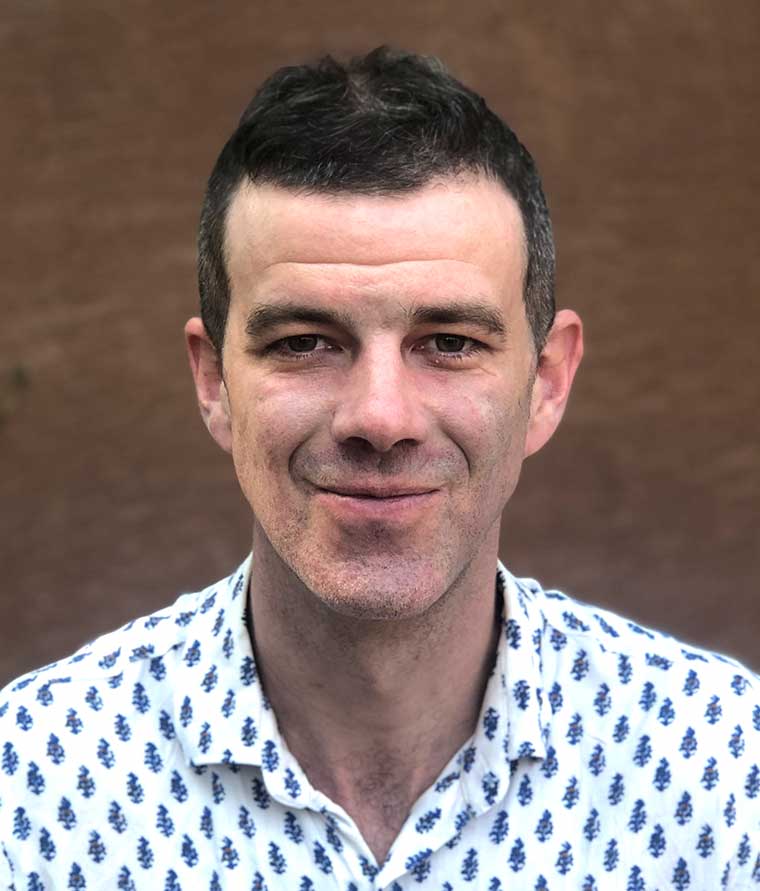
Director, Sarah Lawrence Program at Havana, Cuba
BA, St. Olaf College. MA, PhD, University of Pittsburgh. Historian of modern Latin America—especially Cuba, with interest in Brazil, the Caribbean, and Afro-Latin America more generally—Horst specializes in the history of urban informality and social movements in the Global South. Director of Sarah Lawrence in Cuba, the longest consecutively running US academic exchange program in Havana, he has lived in Havana full-time since 2016. His book manuscript (in progress) centers on slum clearance, urban planning, and city politics in Havana from 1930-1970, the decades before and after the Cuban Revolution of 1959. The book engages with historical debates over issues like the so-called “culture of poverty” and connects to contemporary issues like gentrification. Horst was awarded the University of Pittsburgh’s Eduardo Lozano Memorial Dissertation Prize for best doctoral dissertation in Latin American studies. His previous work has appeared in the Hispanic American Historical Review, the Journal of Urban History, and other journals. SLC 2016–
Undergraduate Courses 2026-2027
History
-
Open, Seminar—Fall
HIST 3352
What is the relationship between migration and nation? How do people in movement shape political dynamics, state formation, and national identity? How is national membership maintained amid diaspora? This course will focus on the history of Cuba, but it uses Cuba’s history to address questions of broad relevance to Latin America and all modern societies. The Cuban Revolution was the first socialist revolution in the Western Hemisphere and a watershed moment for the Cold War. Taking power in 1959, rebels in Cuba toppled a dictatorship, defied the United States, and shocked the world. The Revolution became a beacon for the left throughout Latin America and a warning for the right. More than six decades later, its contested legacy is enough to tilt the balance in United States presidential elections. At the time of the revolution, Cuba was a nation of immigrants. Beginning with the forced migration of enslaved peoples from different regions of Africa, Cuba received waves of immigrants from across the Caribbean, Europe, Asia, and the Middle East. After 1959, Cuba became primarily a sending nation, with an especially large, politically active diaspora in Florida. The past five years have seen the largest wave of emigration in Cuban history. This course will engage with active historical debates around migration, nation, and diaspora in Cuba. We will cover topics like the economic and political dynamics of Haitian and West-Indian migration to Cuba, the nationalist origins of the 1959 revolution, the evolving social dynamics of Latin Miami, LGBTQ politics in the Mariel Boatlift of 1980, and the mass arrival of Cubans via Nicaragua to the United States' southern border since protests in 2021. The course will develop skills in historical methodology, using innovative or relevant historical scholarship and many types of primary sources, including, testimonies, music, visual arts, poetry, novels, and film. We will use the tools of history to construct competing narratives of revolution and nation in Cuba.
Faculty
-
Open, Seminar—Fall
HIST 3032
How do states develop their power? To what extent can people influence that power? Who are “the people”? This course will use the history of modern Mexico to consider broad questions of state formation and democracy. The Mexican Revolution of 1910 was a defining moment for the 20th century, but its legacy has been difficult to classify. From a decentralized peasant movement focused on agrarian reform to a centralizing nationalist project focused on state-building, the revolution was a mix of left- and right-wing tendencies. Mexico served as a refuge for figures like Leon Trotsky, Fidel Castro, and the Sandinistas, even as it became a hub for Latin American anticommunism in the Cold War. It fostered movements for indigenous rights, regional autonomy, gender, and LGBTQ rights but also saw the violent repression of student protests in 1968. This course will examine longstanding tensions between radicalism and conservatism in Mexican History, tracing their interplay with Catholicism, Marxism, and the Latin American Cold War, with special attention to Mexico–United States relations. Looking beyond simplistic narratives of Mexico’s “Institutional” Revolution, we will cover a range of topics, including the modernizing Porfirian period, the rural campaign of Emiliano Zapata and Pancho Villa, the nationalist presidency of Lázaro Cárdenas, anticommunism and the Cold War, student protests in 1968, rock music and counterculture in the 1970s, tourism and the creation of Cancún, the Zapatista movement in the 1990s, and post-NAFTA tensions around drug traffic in the neoliberal 21st century. The course will develop skills in historical methodology, using innovative or relevant historical scholarship and many types of primary sources, including, testimonies, music, visual arts, poetry, novels, and film. We will use the tools of history to construct competing narratives of revolution and nation in Mexico.
Faculty
Previous Courses
History
-
Open, Seminar—Fall
When wildfires spread across the Brazilian Amazon in the summer of 2019, international concern spread rapidly. Containing more than one-third of the world’s primary rain forest, Brazil has featured prominently in hopes for a carbon-neutral future. Yet, Brazil is also home to a complicated past. Since the colonial era, inequality and authoritarianism have competed with democratic reforms and populist social movements. From the occupation of urban favelas by poor families to the development practices of wealthy corporations, legal reforms have often given way to the politics of informality—gray areas beyond the law. How have these politics enabled democracy, and how have they subverted it? And what have they meant for environmental conservation efforts? This course seeks to peel back the layers of informal politics in Brazilian history, with specific attention to the intersection of informal practices, democracy, and environmental politics in the present. We will begin by examining indigenous environmental practices before 1492 and continue with the Iberian glorifications of the walled city as a site of order and the social implications of sugar production and slave society. We will continue by examining the rise of populism in the 1930s; slum clearance in the 1940s and ’50s; contemporary indigenous social movements; and the explosion of drug traffic, gentrification, and deforestation in a neoliberal age. Along the way, we will trace the destruction of Brazil’s once vast Atlantic Forest near Rio de Janeiro, the rise of the Green Party in Brazilian politics, and future prospects for the Amazon. The course makes use of a variety of sources, including scholarship, films, and novels, with a critical analysis of urban popular music..
Faculty
-
Open, Seminar—Fall and Spring
Beginning in 1959, rebels in Cuba toppled a dictatorship, defied the United States, and shocked the world. Six decades later, the Cuban Revolution’s contested legacy is enough to tilt the balance in US presidential elections—a symbol of tyranny for some and of hope for others. This course looks beyond simplistic narratives of a singular “Cuban Revolution.” Rather, it considers longstanding tensions between radicalism and conservatism in Cuban history, tracing their interplay with global movements such as antislavery, decolonization, and Marxism. Beginning with the antislavery movement in the broader Caribbean, course topics will include the contours of US imperialism, the rise of mambo and the Mafia, the politics of Cuban/West African religious practice, the limits of guerrilla warfare, radical economic reforms in practice, postrevolutionary contradictions in gender equality, LGBTQ rights and prostitution reform, and Cuba’s military role in Africa. We will conclude with the recent rise of Cuban hip hop as a new social movement. Throughout the course, we will assess when the Cuban Revolution began—and did it ever end? Did revolutionary leaders empower movements for gender, racial, and labor rights—or limit them? Did they conform to international currents of totalitarian rule—or foster new forms of democratic solidarity within the so-called “Third World”? Analyzing scholarship, testimonials, music, artistic movements, poetry, novels, and film, we will use the tools of history to construct competing narratives of revolution in Cuba and trace fault lines and possibilities of Global South solidarity.
Faculty
-
Open, Seminar—Spring
The aftermath of World War II ushered in an unprecedented period of democracy across Latin America. Entrenched patterns of concentrated landholdings, unequal trade relationships, and deficient rights for workers all came into question. Yet, even as new reforms took shape, times were changing. By the 1950s, US officials pushed back against progressive governance and warned of a dangerous road to communism. The Cuban Revolution of 1959 seemed to confirm their worst fears, even as others saw their wildest dreams made real. Conservative governments heightened repression, as left-wing protest movements radicalized. This course interrogates the aftermath of these events and their consequences for protest, politics, and culture in Latin America up to the present. The Cold War is generally studied as a series of charged encounters between the so called “great powers” and their proxies. This course seeks to critically analyze the impact of outside forces on Latin American societies, highlighting the many ways that local actors diverged from global patterns. The course pays special attention to poor communities, indigenous and women’s movements, and other groups whose politics did not fit neatly into the growing divide. The course moves from the 1954 coup in Guatemala to the growing nonaligned movement in the 1960s, socialism in 1970s Chile, dirty wars across South America, the Nicaraguan Revolution of 1979, the politics of Iran-Contra, civil war in Central America in the 1980s, and the US military’s shift towards the drug war in the 1990s. The course accompanies, but does not repeat, content covered in the Cuban Revolutions course.
Faculty