Faculty
David Hollander
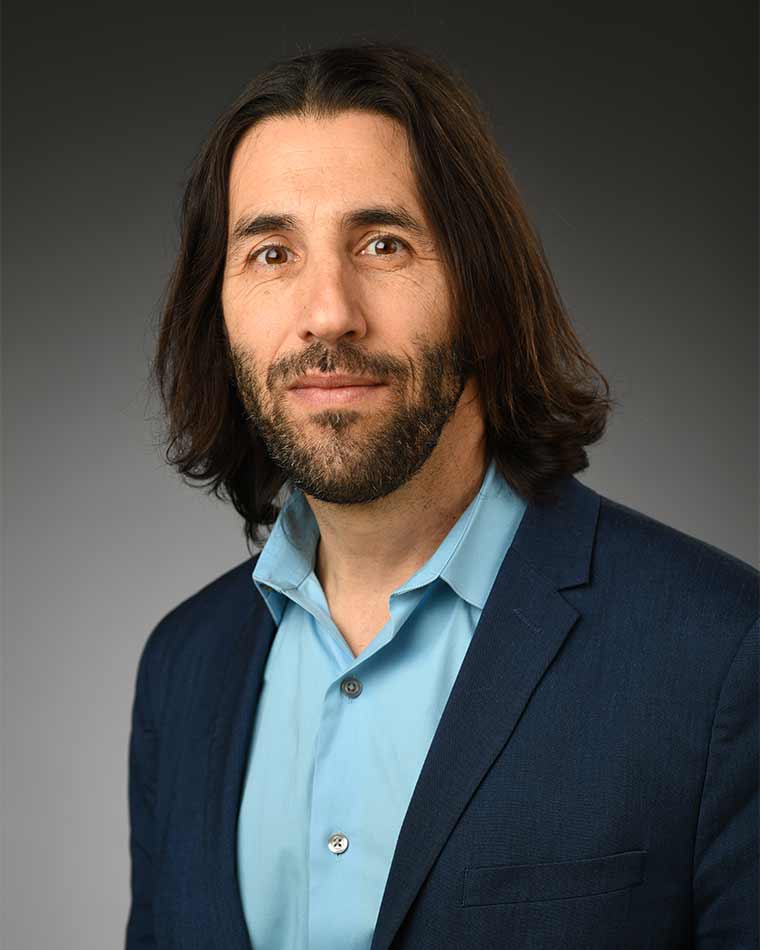
David Hollander
BA, State University of New York-Purchase. MFA, Sarah Lawrence College. Hollander is the author of the novels Anthropica, a finalist for The Big Other Award for Fiction, and L.I.E., a finalist for the NYPL Young Lions Award. His short fiction and nonfiction have appeared in numerous print and online forums, including McSweeney’s, Fence, Conjunctions, Post Road, The New York Times Magazine, Poets & Writers, Lit Hub, and Unsaid. He has co-authored the book for a full-length musical, The Count, and his work has been adapted for film and frequently anthologized—notably in Best American Fantasy. SLC, 2002–
Undergraduate Courses 2026-2027
Writing
-
Open, Small Lecture—Spring
WRIT 2203
There are many ways to read a book (or an essay, or a story, or a poem). We can read for pleasure or for edification, to be enlightened or to be moved. We can read to accumulate facts, to frame an argument, to inform a paper we are writing. But reading fiction as a fiction writer is a special kind of reading. Writers—especially young writers who are trying to absorb and understand craft—must read a work not only to appreciate its merits but also to see how it was constructed, what conceits it puts into play, what narrative strategies it’s employing. This lecture course will endeavor to break down stories and novels from this writerly perspective and to tease out the craft-level decisions that create a work of fiction’s overall effect. Our weekly class sessions—which are more large-seminar conversations and not one-way lectures—will revolve around short novels and short stories that use one of four engines to generate their energies: language, structure, voice, or ideas. Our reading list will likely include Cormac McCarthy, Ottessa Moshfegh, Han Kang, Akwaeke Emezi, Harlan Ellison, Dawn Raffel, László Krasznahorkai, Franz Kafka, and Ted Chiang, among others. Each of our discussions will culminate in a weekly writing prompt. Group conferences will be used to share some of these prompt responses aloud, to discuss how putting different narrative strategies into practice deepens our relationship to our reading, and to (occasionally) generate new work. The course’s ideal student will be curious about the borders of fiction and interested in exploring many approaches to the blank page without privileging any one of them.
Faculty
-
Open, Seminar—Fall
WRIT 3229
In her extraordinary essay, “Fascinated to Presume,” Zadie Smith says that what ultimately draws her to a work of fiction is not necessarily its content. Rather, it has to do with “a certain type of sentence.” I know just what she means. Fiction workshops are (more often than not) hung up on issues of plot, character, and theme; only rarely do we take time to look at the behavioral characteristics of sentences, that tiny domain in which, arguably, all the magic happens. In this course, rather than workshopping stories, we will be workshopping sentences, as students experiment with various topographical approaches to language, based around our encounters with published works driven by highly intentional sentence-writing. We will be reading Garielle Lutz’s essay, “The Sentence Is a Lonely Place,” alongside the kind of sonically-attuned fiction she admires (including stories by Dawn Raffel and Sam Lipsyte). We will look at a muscular style known as “parataxis,” and the kinds of sentences it engenders, through the work of A. M. Homes, Raymond Carver, and Cormac McCarthy. We will look at heavily “internal” prose interested in unpacking consciousness (Virginia Woolf), and we will read masters of the run-on, including excerpts from the Hungarian writer László Krasznahorkai’s War and War, a novel whose chapters are each exactly one sentence long. We will think about syntax (Clarice Lispector, David Foster Wallace), about image and surprise (Lauren Groff, Jo Ann Beard), and about the many ways to inflect sentences with personality, as we ask our own sentences to do more than merely convey information. There will be weekly writing prompts, and each student will, on three occasions, bring a set of five to 10 sentences into the workshop, where we will carefully dissect and analyze these specimens, thinking about how each might be altered to optimize its effect. By mid-semester, each student will settle on a final conference project, which will be a full-length (10 or more pages) story written in one of the many styles we will be examining, along with a short nonfictional account of the student’s attraction to that particular type of sentence. The course is probably best suited to students who have not yet decided, with certainty, who they are on the page; curiosity, playfulness, and a supportive attitude are the main expectations for interested students.
Faculty
Graduate Courses 2026-2027
Master of Fine Arts in Writing
-
Seminar—Fall
WRIT 7306
My workshops have often concentrated on seeing stories architecturally. We have tended to ask (at my behest) questions like: What structural conceits move the story from A to B? How is time handled on the page? In what ways do language and content intersect or diverge? But I have found myself, more recently, wanting to ask questions about influence. Why did the writer submit this work to the workshop? What works have moved or inspired the writer to travel in this direction rather than in some other? What does the writer of this story value in fiction? These questions will, I hope, be the building blocks of this class. Each student will workshop at least once (and probably twice); but when students submit their original stories, they will also submit a published story that inspired them. The links between the published work and the original work may be overt or hidden, thematic or architectural, shallow or deep. Discussions of original work will be preceded by a short discussion of the linked published piece and led by the student who submitted both. In addition to the published “inspirational” pieces, students will occasionally read published works chosen by yours truly (that feature some connection to the work in discussion) and will sometimes respond to writing prompts that, likewise, grow out of our discussions. My expectations are that students will be open to all sorts of fiction, supportive of one another’s efforts, and willing to take risks on the page.
Faculty
-
Seminar—Spring
WRIT 7452
While today the term “speculative fiction” casts a very wide net, encompassing nearly everything that is not straight-up literary realism, this super-genre’s roots are a lot more specific. The term was (arguably) coined in 1941 by Robert Heinlein, who wanted to classify a certain type of science-fiction that didn’t care so much about the science. Heinlein was a member of the vanguard of this initial “speculative fiction,” which was a sub-genre, not a super-genre. These original spec writers were more interested in the human than the technological, and they wanted their fiction cordoned off from the harder science-fiction (or what was sometimes called “science-fact-ion”) of writers interested in real-science hypotheses and explorations.
This course will revert to that initial understanding of speculative fiction. You won’t see stories by Ted Chiang (or Andy Weir, or Isaac Asimov) on the syllabus—writers who really get the science but seem only marginally invested in character and language. What you will see are both contemporary (Kim Fu, Kelly Link) and golden-age (Harlan Ellison, Ursula Le Guin) spec writers who employ a soft science-fiction to explore the big themes that we often associate with more “literary” writing. We’ll be looking at these fictions from two primary perspectives: First, we will ask, What does this writer have to say and how are their goals served by genre?; second, we will ask, How is this story constructed at the level of language, voice, and structure?
My own work is usually considered “speculative,” but I don’t write with this in mind. I believe that great fiction is interested in the deep mysteries of consciousness, time, and suffering. Genre—and more specifically what I’m calling Science(less) Fiction—can serve as a delivery system for these themes… as a path into the mystery. The work on our syllabus will reflect this point of view.
Faculty
Previous Courses
Master of Fine Arts in Writing
-
Workshop—Fall
I am amused by the idea that only some fiction is “speculative.” A blank page, after all, is not a physical construction site. What a writer puts on that page is a series of hypotheses that sponsor no life and no activity outside the page’s confines. Whether the work falls under the umbrella of “psychological realism,” or “expressionism,” or “science fiction,” or “surrealism,” or “naturalism,” or “fantasy,” the goal is the same: to move, change, or otherwise affect the reader.
This is the spirit in which this speculative fiction writing workshop is offered. Our reading list will include everything from the postmodern fracture narratives of Robert Coover to the genre-bending world-inversions of Anne Carson to the surrealism of Rahawa Haile to the madcap speculations of Harlan Ellison to the architecturally unique work of Carmen Maria Machado to the traditional realism of Jhumpa Lahiri. The goal in discussing these works will be to see their underlying patterns, and the ways in which every story—including the realist stories—must “cheat” reality in some way to deliver its message to you.
As for how the class will actually run, here are a few things I’m (relatively) sure about. Each student will bring at least one, and possibly two, stories into the classroom over the course of the semester. Students will often write in response to prompts designed to help them find a voice, take a chance, do something they wouldn’t expect of themselves. We will, on two or three occasions, take a break from our routine to discuss a great (and, for those who don’t know me, probably unorthodox) novel. We will try to do away with the words, “I want” in our critiques of student stories, and to instead attune ourselves to what each story is trying to do, and to imagine how it might become more purely what it is rather than something we want it to be.
Faculty
-
Workshop—Fall
78151
I am amused by the idea that only some fiction is “speculative.” A blank page, after all, is not a physical construction site. What a writer puts on that page is a series of hypotheses that sponsor no life and no activity outside the page’s confines. Whether the work falls under the umbrella of “psychological realism” or “expressionism” or “science fiction” or “surrealism” or “naturalism” or “fantasy,” the goal is the same: to move, change, or otherwise affect the reader. This is the spirit in which this speculative fiction-writing workshop is offered. Our reading list will include everything from the postmodern fracture narratives of Donald Barthelme to the genre-bending world inversions of Anne Carson to the surrealism of Rahawa Haile to the madcap speculations of Harlan Ellison to the architecturally unique work of Carmen Maria Machado to the patterned realism of AM Homes. The goal in discussing these works will be to see their underlying patterns and the ways in which every story—including the realist stories—must “cheat” reality in some way to deliver its message to you. As for how the class will actually run, here are a few things I’m (relatively) sure about. Each student will bring at least one, and possibly two, stories into the classroom over the course of the semester. Students will often write in response to prompts designed to help them find a voice, take a chance, do something that they wouldn’t expect of themselves. We will, on two or three occasions, take a break from our routine to discuss a great (and yes, “speculative”) novel. We will try to do away with the words “I want” in our critiques of student stories and, instead, to attune ourselves to what each story is trying to do and to imagine how it might become more purely what it is rather than something we want it to be. If this sounds interesting, show up; we’ll work the rest out as we go.
Faculty
-
Workshop—Spring
I’ve been trying throughout my teaching career to find a way to teach writing that feels open, honest, and playful. My goal is to encourage innovation and experimentation and to lead my classes to the collective epiphany that the possibilities for fiction are endless and that not everything that comes through the classroom has to be discussed in terms of what John Hawkes once called “the enemies of the novel”—plot, character, setting, and theme. I am suspicious of peer critique that uses, as its engine, the words “I wanted.” In an ideal situation, we would try to see stories from the inside-out and try to imagine how they might become more purely what they are rather than something that we want them to be. We would value language, style, and structure right alongside Hawkes’ quartet of imagined enemies. Voice would take precedence over plot. We would encourage ambitious failure more than careful success and wouldn’t care about readying every story for publication. We would applaud a writer for taking a risk rather than burying them for the risk’s inscrutability. We wouldn’t be so small-bore in the way that we think and talk about writing. These are ideas, of course, not guidelines.
So here are a few things I’m (relatively) sure about. Each student will bring at least one story into the classroom over the course of the semester—possibly no more than that. Students will often write in response to prompts designed to help them find a voice, take a chance, do something that they wouldn’t expect of themselves. We will, on two or three occasions, take a break from our routine to discuss a great (and likely unorthodox) novel. We will try to spend some time talking about aesthetics and discussing essays by writers who think they’ve got it all figured out. It’s having it all figured out that scares me. I stand with Socrates, who only knew that he knew nothing. Every class should be equal parts rigor, play, and discovery. If this sounds interesting, show up, and we’ll work out the details.
Faculty
-
Workshop—Spring
I’ve been trying throughout my teaching career to find a way to teach writing that feels open, honest, and playful. My goal is to encourage innovation and experimentation and to lead my classes to the collective epiphany that the possibilities for fiction are nearly endless—and that not everything that comes through the classroom has to be discussed in terms of what John Hawkes once called “the enemies of the novel”—plot, character, setting, and theme. I am suspicious of peer critique that uses, as its engine, the words “I wanted.” In an ideal situation, we would try to see stories from the inside-out and to imagine how they might become more purely what they are rather than something we want them to be. We would value language, style, and structure right alongside Hawkes’ quartet of imagined enemies. Voice would take precedence over plot. We would encourage ambitious failure more than careful success and wouldn’t care about readying every story for publication. We would applaud writers for taking a risk rather than burying them for the risk’s inscrutability. We wouldn’t be so small-bore in the way we think and talk about writing. The goal of this workshop is to move closer to these ideals. Doing so will require us to read published work that explores many narrative and aesthetic strategies: stories driven by language (like those of Dawn Raffel and Anne Carson, for example); stories driven by structural innovation (Julio Cortazar, Margaret Atwood); stories that thrive on patterns (Anton Chekhov, Carmen Maria Machado); and stories with a conceptual bent (Angela Carter, Nana Kwame Adjei-Brenyah). Every class should be equal parts rigor, play, and discovery, as we seek to use the work of these masters—and our own collective imagination—to illuminate the outer edges of the frame of fictional possibility.
Faculty
-
Seminar—Spring
WRIT 7306
While this workshop will not break the workshop mold and will feature many of the conventions of the genre (peer critique, analysis of published works, writing prompts, etc.), our reading list will focus exclusively on formal experimentation in fiction. I hope to share with my students the freedom and mobility entailed by structural play and innovation and to promote varieties of writing that do not heavily rely on what the novelist John Hawkes once called “the enemies of the novel”—plot, character, setting, and theme. Students will workshop two stories over the course of the semester, the second of which ought to employ (or be inspired by) some of the structural chicanery that we will be discussing in class. Our weekly writing exercises will, likewise, require students to seek out new arrangements for their work. Our reading list will include patterned escalation stories (Donald Barthelme, Julio Cortazar), “listing” stories (Merc Fenn Wolfmoor, Lucia Berlin, Margaret Atwood), circular stories (Jorge Luis Borges, Maurice Sendak), stories poured into structures not normally associated with fiction (Carmen Maria Machado, Yann Martel, Harlan Ellison), and stories collaged from disparate parts (Michael Ondaatje, Shelley Jackson). The goal is to expand the borders of fiction, to experience modalities outside the traditional plot-and-character-driven narrative scheme, and (most importantly) to play on the page…to see fiction as a kind of serious play. Students should be excited to step outside their normal compositional process, to take risks, and to support their peers’ risk-taking. Alis grave nil, friends. May language release you from its lies.
Faculty
-
Workshop—Fall
The formulaic nature of many fiction writing workshops seems (to me) antithetical to what it means to make art. I’ve been trying desperately for years now—with varying degrees of success—to find a way to “teach” writing that feels open, honest, and playful. Want to know what I’d like? For a class to encourage innovation and experimentation, to come to the collective epiphany that the possibilities for story are endless, and that not everything that comes through the classroom has to be discussed in terms of what John Hawkes once called “the enemies of fiction”—plot, character, setting, and theme.
I am suspicious of peer critique that uses, as its engine, the words “I want.” In an ideal situation, we would try to see stories from the inside-out, and try to imagine how they might become more purely what they are, rather than something we want them to be. We would value language, style, and structure. Voice would take precedence over plot.We would encourage ambitious failure more than careful success. We would applaud a writer for taking a risk, rather than bury her for the risk’s inscrutability. We wouldn’t treat every story as something to be made publication-ready and wouldn’t be so small-bore in the way we think and talk.
These are ideas, of course, and tell you nothing about how I actually run my classroom. So here are a few things I’m (relatively) sure about. Each student will bring at least one story into the classroom over the course of the semester. We will often write in response to prompts designed to help you find a voice, take a chance, do something you wouldn’t expect of yourself. We will, on two or three occasions, take a break from our routine to discuss a great (and, for those of you who don’t know me, likely unorthodox) novel. We will try to spend some time talking about aesthetics, and discussing essays from writers of all stripes who think they’ve got it all figured out.
It’s having it all figured out that scares me. In the end, I want us to follow Socrates’ lead, and to realize that we only know that we know nothing. Every class should be equal parts rigor, play, and discovery. If this sounds interesting, show up, and we’ll work out the details.Faculty
-
Workshop—Fall
In recent years, my workshops have concentrated on seeing stories architecturally. We have tended to ask (at my behest) questions like: What structural conceits move the story from A to B? How is time handled on the page? In what ways do language and content intersect or diverge? But I have found myself, more recently, wanting to ask questions about influence. Why did the writer submit this work to the workshop? What works have moved or inspired the writer to move in this direction rather than in some other? What does the writer of this story value in fiction? These questions will, I hope, be the building blocks of this class. Each student will workshop at least once (and perhaps twice); but when students submit their original stories, they will also submit a published story that has inspired them. The links between the published work and the original work can be overt or hidden, thematic or architectural, shallow or deep. Discussions of original work will be preceded by a short discussion of the linked published piece and led by the student who submitted both. In addition to the published “inspirational” pieces, students will occasionally read published works, chosen by yours truly, that feature some connection to the work we’ve been discussing and will sometimes respond to writing prompts that, likewise, grow out of our discussions. My expectations are that students will be open to all sorts of fiction, supportive of one another’s efforts, and willing to take risks on the page.
Faculty
Writing
-
Open, Seminar—Fall
A blank page is not a physical construction site, and worlds created from language are not “real” in the way that an apple is real. Whether you are writing traditional realist short fiction, or working with magical elements, or making wildly experimental language art, you’re manipulating a matrix—one that, if established with sufficient rigor, creates the illusion of substance from the ether of abstraction. Why, then, is there a seemingly widespread agreement that realism is the “most real” kind of illusion? This workshop will begin from the following assumptions: All fiction is speculative fiction; a story is beholden to nothing other than its own internal logic; logic does not need to sync to the logic of “the real world” (whatever that may mean); and experimentation is not a barrier to Truth (with a capital “t”). We’ll be reading some of the most innovative and surprising fiction being written today and seeking out—through our own weekly writing prompts—the limits of what we call fiction. Our reading list will include a short, unorthodox novel or two (Maggie Nelson’s Bluets and Michael Ondaatje’s The Collected Works of Billy the Kid are both strong possibilities), as well as short stories by writers including Julio Cortazar, Carmen Maria Machado, Ottessa Moshfegh, Etgar Keret, Jonathan Callahan, Franz Kafka, Jhumpa Lahiri, and Angela Carter. Over the course of the semester, each student will workshop one original story. We will be writing often, reading great and inimitable works, and attempting to create a community that values experimentation and play in the creation of short fiction. The idea is to honor fiction’s myriad possibilities and to applaud any fictional matrix that arrives to us free of glitches. The only prerequisites are generosity, curiosity, and open-mindedness.
Faculty
-
First-Year Studies—Year
WRIT 1013
Many students enter college as avid readers and writers, but their understanding of what fiction is—its range and possibilities—will greatly expand during their undergraduate years. This writing workshop is designed to invite and fast-track that experience by exposing students to fiction’s aesthetic diversity and the myriad ways it can enchant, enlighten, and unsettle us—without privileging any single approach. To that end, we will read everything from the psychological realism of A. M. Homes and Jhumpa Lahiri, to the eerie expressionism of Franz Kafka and Haruki Murakami, to the funhouse narratives of Donald Barthelme and Angela Carter, to the genre-bending work of Brian Evenson and Kelly Link. We will not only explore the logic behind stories but also analyze their construction: the way point-of-view decisions steer us through a work of fiction, the way meaningful patterns drive us deeper, and the way sentence-level choices engineer a story’s lasting effect. But the course—a “user’s guide,” after all—is as much about writing as it is about reading. Students will bring what they are learning to their own work, initially by responding to weekly writing prompts and later by sharing several longer pieces with their classmates during focused peer-critique sessions. Students will be encouraged to play on the page, as we build a community determined to seek out the borders of fiction. The class will culminate in a final portfolio, giving students the opportunity to collect, arrange, and reflect upon the diverse work that they have created over the course of the year. In fall, students will meet weekly with the instructor for individual conferences; in spring, individual conferences may be weekly or biweekly.
Faculty
-
Open, Seminar—Year
The late novelist John Hawkes said that he began writing fiction with the assumption that its “true enemies” were “plot, character, setting, and theme.” This same quartet seems to dominate the conversation in writing workshops. We like to “vote” on the plot’s efficiency, the theme’s effectiveness, the characters’ foibles. If we are not careful, our discussions can descend to the level of a corporate focus group, a highly effective forum for marketing laundry detergents but maybe not for making art. This yearlong workshop will attempt, in its own small way, to see the fiction of both published masters and participating students through a wider lens. In the first semester, we will read across a wide range of styles and aesthetics and will write in response to weekly prompts designed to encourage play. Issues of language, structure, and vision will be honored right alongside Hawkes’ imagined enemies. In the second semester—provided all goes well—each student will workshop two stories. Our reading list will include several short and unorthodox novels (possibilities include Autobiography of Red by Anne Carson, Invisible Cities by Italo Calvino, Concrete by Thomas Bernhard, and The Hour of the Star by Clarice Lispector) and weekly short stories by writers both well-known and ignored. These may include Robert Coover, Dawn Raffel, Etgar Keret, Julio Cortazar, Ottessa Moshfegh, Donald Barthelme, Harlan Ellison, and Carmen Maria Machado. We will also regularly read essays that challenge us to think about what art is and why anyone would want to make it. I am looking for generous students interested in fiction-as-play. The model here is counterpoint, so it may help if you have already taken a fiction-writing workshop—though the course is offered (generously) to writers of all backgrounds.
Faculty