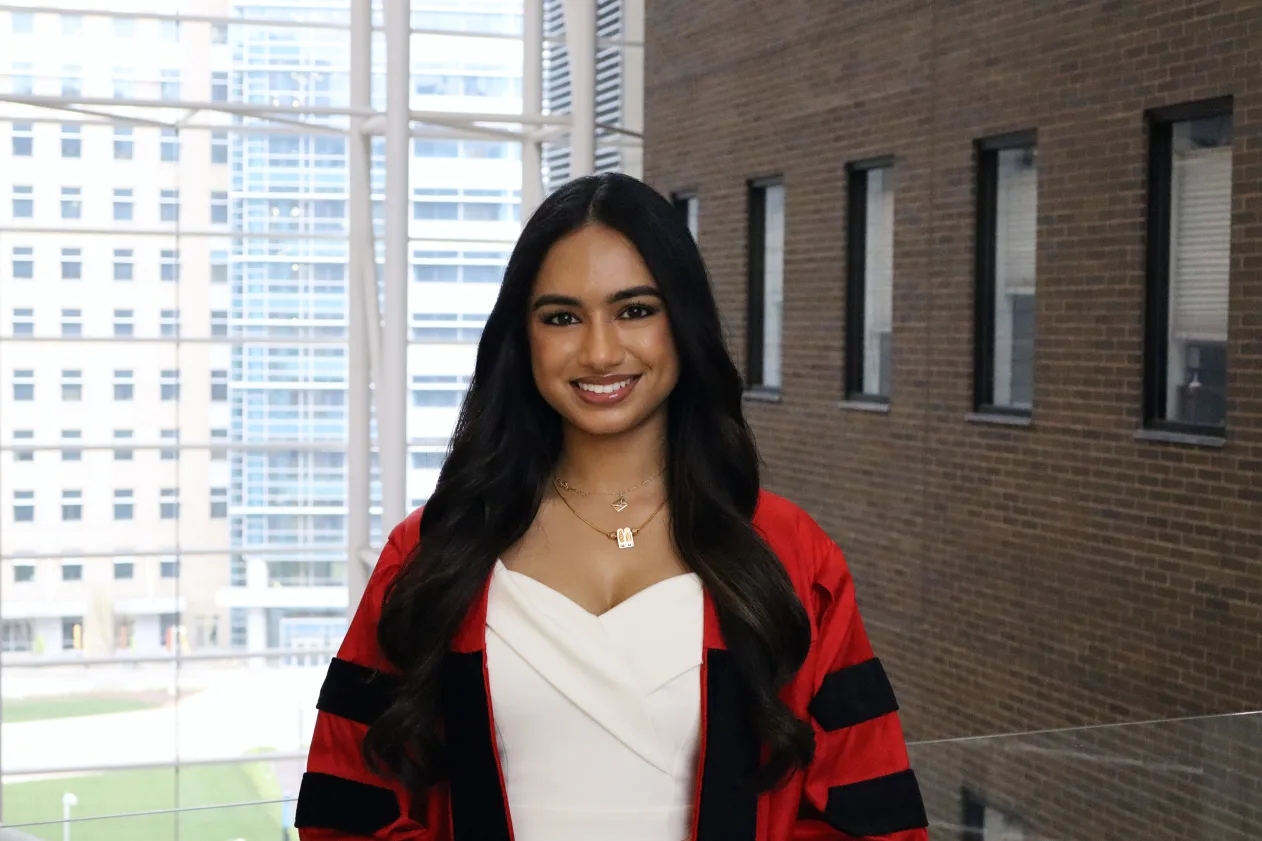
Sneha Rajan Bray ’21
How did you first learn about the field of Dance/Movement Therapy?
During my senior year of college, I was accepted to medical school and began preparing for the next chapter of my life. As I approached graduation, I found myself reflecting on the significant role dance had played throughout my childhood and college experience, and I struggled with the idea of leaving such an important part of myself behind. I wanted to find a way to bridge my passion for dance with my growing interest in medicine. What I loved most about dance was its ability to provide a means of self-expression and foster meaningful connections with others, and I hoped to find a way to bring that same experience to others. In searching for a way to integrate these interests, I discovered dance/movement therapy, a field that resonated deeply with me. It offered exactly what I had been looking for: an approach that emphasizes the mind-body connection and recognizes movement as a powerful tool for communication, emotional expression, and healing beyond its traditional role in performance.
What led you to defer your med school admission and pursue your degree in Dance/Movement Therapy?
Once I realized that I wanted to make dance an integral part of my career in medicine, I knew I needed a strong foundation in the principles and techniques of dance/movement therapy to translate this passion into practice. Pursuing a master’s degree in dance/movement therapy before medical school offered an opportunity to develop these skills and gain a deeper understanding of how movement-based interventions can be used to support an individual’s emotional, social, physical, and cognitive integration. I wanted to build the knowledge and clinical experience necessary to thoughtfully incorporate these approaches into my future medical practice, allowing me to address patients’ needs through a more holistic, mind-body centered approach to care.What was it about Sarah Lawrence College’s Dance/Movement Therapy program that appealed to you?
What appealed to me most about Sarah Lawrence College’s Dance/Movement Therapy program was its holistic approach to understanding the individual and the emphasis it places on the connection between movement, emotional expression, and psychological well-being. I was particularly excited by the curriculum’s integration of academic coursework with early exposure to hands-on fieldwork. I was drawn to the opportunity to develop both a strong theoretical foundation and practical clinical skills that would allow me to understand how movement can be used as a therapeutic tool across diverse populations and clinical settings. Additionally, the program’s small class size appealed to me because they foster a more intimate, collaborative learning environment where I could benefit from robust verbal/movement participation in classes, individualized faculty guidance, and genuine peer connections.Tell us about your experience in the program.
My experience in the program was incredibly meaningful, both personally and professionally. The coursework was very thorough, it provided me with a strong foundation in the fundamental principles of dance/movement therapy and helped me develop a deeper understanding of the therapeutic applications of movement. I was especially grateful for the kindness and support of the faculty, who encouraged me to explore my own movement style, reflect on my personal values, and develop my identity as a future dance/movement therapist. The program’s emphasis on diversity, inclusion, and social justice also fostered a strong sense of community, allowing me to feel valued and supported throughout my training. I learned tremendously from my classmates, whose diverse backgrounds, experiences, and perspectives enriched my understanding of the field. My second-year internship at Rockland Psychiatric Center was another particularly valuable part of my experience. With the guidance of both the on-site dance/movement therapist and my assigned BC-DMT supervisor, I was given opportunities to practice new skills, incorporate feedback, and explore the approaches that resonated most with me. Overall, the program provided a supportive environment in which I could grow, challenge myself, and begin to develop my own identity as a dance/movement therapist while strengthening my commitment to integrating movement-based approaches into my future career in medicine.What advice would you give someone who is considering pursuing a degree in Dance/Movement Therapy?
My advice to someone considering a degree in Dance/Movement Therapy would be to approach the experience with an open mind, challenge themselves to step outside their comfort zone, and think about how to use this as an opportunity for personal and professional growth. There are so many different careers in Dance/Movement Therapy, so use this time to explore options and take advantage of the knowledge and diverse perspectives of faculty, supervisors, and classmates. Ultimately, I would encourage anyone interested in this field to trust their curiosity and remember that there is no single way to move or to be a dance/movement therapist. The most meaningful part of the journey is discovering how your unique experiences, values, and movement style can inform the way you connect with and support others.
How has your MS in Dance/Movement Therapy informed your psychiatry residency?
My MS in Dance/Movement Therapy has had a profound influence on both my decision to pursue psychiatry and the way I approach patient care as a resident. In fact, my internship at Rockland Psychiatric Center was what first inspired me to pursue a residency in psychiatry, a specialty I had not previously considered. Being part of the patient care team and witnessing how treatment plans were tailored to each individual’s unique needs was a formative experience that shaped my understanding of psychiatric care. My training in dance/movement therapy continues to inform my interactions with patients, particularly in the attention I pay to body language, nonverbal communication, and the ways individuals express themselves beyond words. I also incorporate movement-based techniques when teaching coping skills, recognizing that movement can be a valuable tool for emotional expression and regulation. More broadly, my background has reinforced the importance of a holistic, individualized approach to treatment that considers the interconnectedness of the mind and body.
What are you doing now and what do you hope to be doing in the future?
Currently I am a PGY-2 psychiatry resident at Zucker Hillside Hospital in New York City. I rotate through a variety of patient care settings, and the program has a lot of flexibility that allows me to continue pursuing my passion for dance/movement therapy while completing my psychiatry training. I have focused on advocating for dance/movement therapy and expanding awareness of its applications within psychiatric care. Last year, I delivered a residency-wide lecture-demonstration to introduce my colleagues to the principles of dance/movement therapy and explore how movement-based interventions can complement traditional psychiatric treatment. I am also working on a project to educate psychiatric rehabilitation staff and other inpatient clinicians on the principles and benefits of dance/movement therapy, with the goal of encouraging the integration of movement-based interventions into patient care. Looking ahead, my goal is to establish my own clinical practice where I can integrate my training in psychiatry and dance/movement therapy to provide individualized, holistic psychiatric care. I envision a practice that combines medication management, psychotherapy, and dance/movement therapy to address the interconnected emotional, psychological, and physical aspects of well-being. Ultimately, I hope to continue bridging the fields of dance/movement therapy and medicine, both through my own clinical work and by helping other healthcare providers recognize the value of incorporating movement into psychiatric care.