MFA Programs
About the Assistant Director
Meet Madeleine (Maddie) Mori, Assistant Director of the MFA in Writing Program
“Rarely have I encountered such a compassionate and curious group of artists as we consistently have here in the SLC MFA. Faculty members are just as invested in their students’ projects, minds, and paths as students are eager to learn from their teachers.”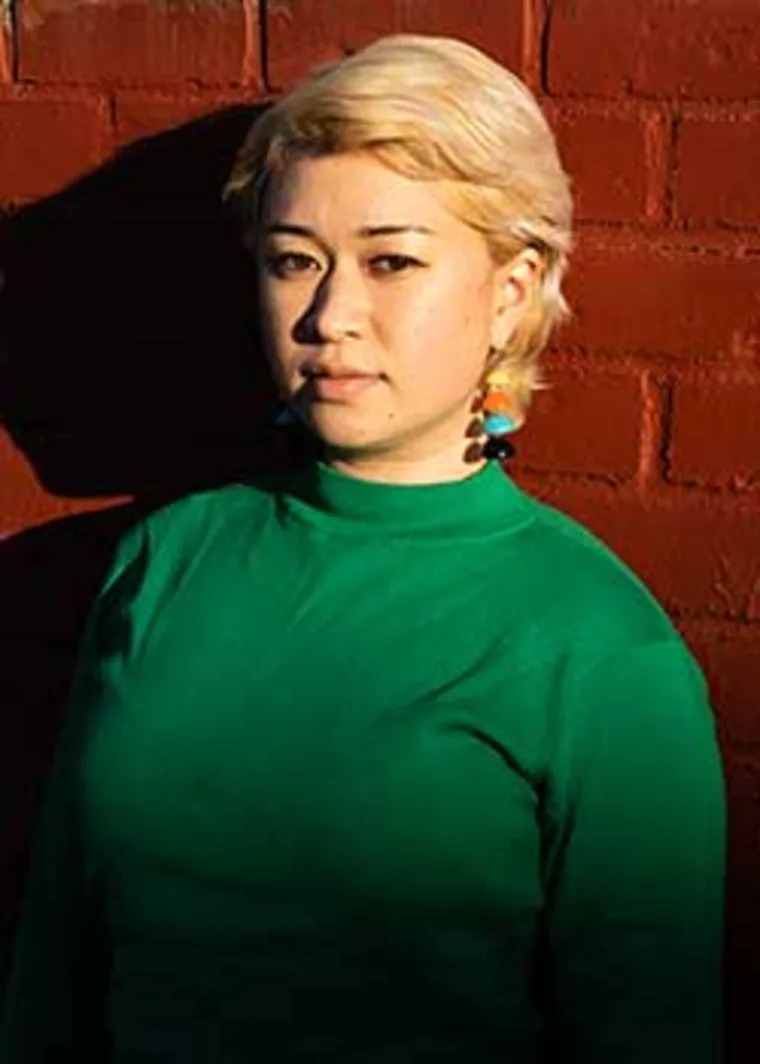
Background
Assistant Director at Sarah Lawrence College
Maddie joined Sarah Lawrence College in 2022 as the Assistant Director of the MFA Writing Program. Alongside Director Paige Ackerson-Kiely, she plans and runs the Literary Colloquium series, advises students academically and professionally, oversees teaching opportunities for students and other MFA student employment, supports the MFA alumni network and the annual Sarah Lawrence Poetry Festival, and serves as the faculty advisor to the graduate student-run literary journal Lumina.
Education
Maddie earned a BS in Wine and Viticulture from California Polytechnic University San Luis Obispo, where she was the recipient of an Academy of American Poets Prize, and an MFA in poetry from New York University, where she served as a Poetry Editor of Washington Square Review.
Writing Life
Madeleine Mori is a Japanese American writer and a native of the San Francisco Bay Area. Her poems, personal essays, and food and beverage articles have appeared in The Cincinnati Review, The Oxford Review of Books, jubilat, DIAGRAM, The American Poetry Review, The Yale Review, The Common, American Chordata, The Margins, 2022 Best New Poets (University of Virginia Press), Condé Nast Traveler, and Pleiades Magazine, among others. Her essays have been nominated for the Pushcart Prize and named notable in The Best American Essays 2023. She has received support from the Community of Writers, NYU’s Provost, and the Asian American Writers’ Workshop, where she was a 2021 Margins Fellow. She has attended the McCormack Writing Center Summer Workshop (previously known as Tin House Summer Workshop) and has been a resident at Millay Arts. She was the Founding Poetry Editor at Pigeon Pages.
Interests
Professional Interests
Maddie’s writing interests include documentary, ekphrastic, eco, and visual poetics, personal essay and memoir, hybrid and flash writing, and other writing that is interdisciplinary and seeks to push against set expectations of genre and form. She is particularly passionate about LGBTQIA+ research and history as well as writing about grief, memory, and embodiment. Stemming from her background in food and beverage writing, she also loves any writing that incorporates vivid sense memories, particularly from communities of color and diasporic communities.
Personal Interests
Maddie’s other passions include learning about unique animals and plants, cooking elaborate meals, playing video games, curating playlists, watching reruns of Star Trek, winning over literary divas, thrifting, dive bars, karaoke, tarot, rituals, dreams, decaying Americana, kitsch, lore, and other ephemera.
Maddie Answers Your Questions
What was your journey to becoming a writer?
I was raised by a poet mother, so writing poetry was normalized for me as an approach to documenting the experiences of life and processing emotion. Growing up in the Bay Area as an imaginative only child, I was also a voracious and eclectic reader, and soaked up local literary history, particularly finding an anchor in the works of the Beat Generation and regularly haunting the aisles of used bookstores like City Lights and Green Apple. Yet it wasn’t until I took undergraduate creative writing courses that I came to realize one could build a life as a contemporary poet.
One of my undergraduate poetry workshop instructors, Kevin Clark, took me aside in his class one day and asked if I’d ever considered getting an MFA. He worked with me on developing my materials for grad school, after I had graduated from college and moved back to the Bay Area to work in winemaking. I chose to apply to MFA programs primarily based in New York as it had always been a fantasy of mine to live and make art in the city where Lou Reed, David Byrne, Patti Smith, Keith Haring, Jim Jarmusch, and so many others had found their communities in which to create together. I was shocked to learn in time I had been accepted to several programs, and received some of my first acceptance phone calls in the midst of a workday in the cellar, while I was on top of a tall stack of wine barrels in the cold room.
What led you to work in academia and to Sarah Lawrence?
I graduated from the NYU Creative Writing MFA in 2018, where I first worked as an events assistant for the program while pursuing my studies, and which started me on my path of arts admin work and event planning. After graduating I worked as the personal assistant to faculty member Sharon Olds, and then worked for the Creative Writing Program as their Administrative Aide for several years, where I “wore a lot of hats” and helped support the program through events planning, finances, course scheduling, building and office maintenance, and being a friendly face to all faculty members and students.
Though I did not attend Sarah Lawrence for my MFA, when a friend sent me the job opening for the Assistant Directorship I thought it was a natural progression from the work I was doing at NYU. I first visited the Sarah Lawrence campus for the Poetry Festival in 2017, where I shared some of my poems during the MFA Showcase event. I loved the train ride up from the city, the campus, the Slonim Living Room, and the sense of experimentation and camaraderie I saw through the SLC MFA students I met.
When I was offered the job, I was thrilled to build my relationship with this program, and to continue benefiting from proximity to a thriving intellectual and creative ecosystem. I love attending all the craft talks and readings and having conversations with our students about publication and hybridity in writing, which feeds back into my own creative practice.
Why should students come to Sarah Lawrence for their MFA in Writing?
Rarely have I encountered such a compassionate and curious group of artists as we consistently have here in the SLC MFA. Faculty members are just as invested in their students’ projects, minds, and paths as students are eager to learn from their teachers. The biweekly conference system at Sarah Lawrence is a great example of that faculty investment and support network and is an opportunity for students to ask questions of someone who was once in their exact position as an artist.
I think getting an MFA, when it’s the right fit of community, faculty, and affordability, can be akin to Cognitive Behavioral Therapy (when it’s equally a right fit of therapist). Both are a form of guided meditation, a supportive journey into the depths of selfhood, memory, association, and meaning-making. For writers who are able to approach not only their creative work, but also themselves and each other with generosity, they can come out on the other side feeling activated, integrated, even transformed.
There’s this holistic feeling to the community as Sarah Lawrence, which is even further enhanced by the cross-genre nature of the program. Other programs can feel siloed or competitive between genres, but our students all get to know each other and form friendships across genre lines. At the monthly student and faculty happy hour readings, students cheer for their teachers and for each other exuberantly; at the graduation dinner at the end of the year, they give passionate speeches thanking the community and the friends they made along the way. Most of our writers are interdisciplinary, working in multiple genres and perspectives, and I see this commitment to experimentation, play, and productive questioning having a greater influence on the diversity of thought and artistic identity within the program.
Who are some of your favorite writers and books?
Other than our fabulous SLC faculty members: Kim Addonizio; Hanif Abdurraqib; Etel Adnan; Ai; Sarah Aziza’s The Hollow Half; James Baldwin; Catherine Barnett; Ted Berrigan; David Berman’s Actual Air; Elizabeth Bishop; Lucie Brock-Broido; Anne Carson; Alexander Chee’s How to Write an Autobiographical Novel; Franny Choi; Lucille Clifton’s The Book of Light; Daniel Clowes; Ama Codjoe; Lydia Davis; Olena Kalytiak Davis; Philip K. Dick; Emily Dickinson; Ross Gay; aracelis girmay; Louise Glück; Garth Greenwell’s Cleanness; Elizabeth Hardwick’s Sleepless Nights; Robert Hass; Terrance Hayes; Sheila Heti; Cathy Park Hong’s Engine Empire and Minor Feelings; Lynda Hull; Jenny Johnson; Katie Kitamura; Kiese Laymon’s Heavy; Ursula K. Le Guin; Larry Levis; Rebecca Lindenberg’s Love: An Index; Layli Long Soldier; Francisco Márquez, Maggie Millner; Sarah Minor’s Bright Archive; Toni Morrison; Sharon Olds; Kathleen Peirce’s Mercy; Carl Phillips; Sylvia Plath; Claudia Rankine; sam sax; W.G. Sebald; Diane Seuss; Brandon Shimoda; Emily Skillings; Patti Smith; Patricia Smith; Adrian Tomine; Tomas Tranströmer; Virginia Woolf; Jenny Xie; Yusef Komunyakaa, and Monica Youn, to name a few.
Are there any personal projects you are working on right now?
I am editing my debut poetry manuscript and developing a collection of hybrid personal essays. For years I have been working on a syllabus for a series of private wine salons I want to host for writers interested in learning more about the language of wine, while incorporating generative writing exercises around the senses and sense memories. I hope to test run the first salons in 2027!
Watch, Listen, Read
- Follow along with Madeleine’s publications on her website: https://www.madeleinemori.com/.
- During her time as a 2021 Margins Fellow through the Asian American Writers’ Workshop, Madeleine Mori synthesized her winemaking and poetic training to guest edit a special folio for The Margins featuring lyrical writing about wine. You can read her lyric essay “Tasting Notes” (selected by the editors for inclusion in the folio) here.
- Read Madeleine’s 2023 personal reportage piece in Condé Nast Traveler Digital: “California’s Craft Sake Movement Has Come Into Its Own, ” which was part of Home, Made, a collection of stories honoring Asian diasporas creating vibrant communities by weaving their heritages with their American hometowns. You can read the full collection here.