Writing Institute story
Where Are They Now: Writers Week
Here at the Writing Institute, we are gearing up for Writers Week 2026, which will be the largest in our program's history! This summer we will welcome nearly 200 students online and on campus.
To celebrate, we're throwing it back to Writers Weeks of the past. We reached out to alumni of the program to see where they are now, what they remembered from the program, and how they continue to use their creative thinking in their current careers.
Here are some of their responses:
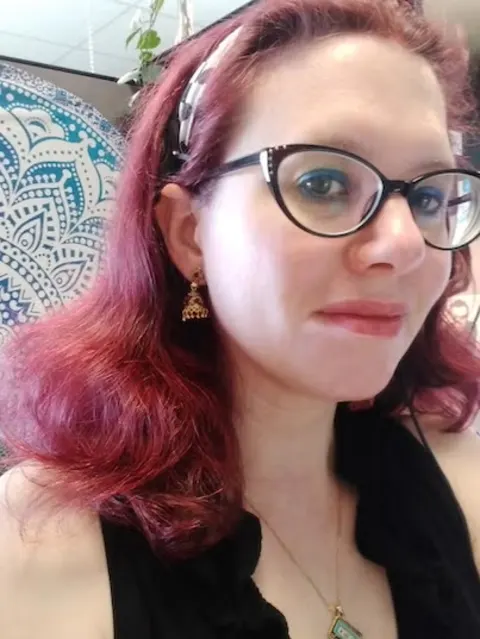
Libby Cudmore (she/her)
Writers Week Alumni 2000
Writer/Teacher
Author of Negative Girl, 2024
What do you remember about participating in Writers Week? What was your favorite part?
My favorite part was getting to meet and be around other writers. It can be a really lonely profession at times, but getting to meet so many other people, hear what they're working on and learn about their lives was so pivotal in making me feel like, yes, this is real, this is something I want to do with my life— and don't tell anyone, but my favorite part was probably staying up WAY too late, just talking.
How do you find yourself using writing in your career, or in your everyday life?
I'm a professional novelist/short story writer by trade, but even before that, I worked as a journalist, a managing editor and in marketing, as well as teaching Creative Writing classes. I'm not sure there was ever a time when I wasn't using writing in my career!
What advice do you have for high schoolers in the program this summer who might be interested in pursuing writing-focused careers?
Write, read, write more, read more. Watch documentaries. Read work that isn't in your genre. Work at a newspaper so you can learn to write clean copy on deadline and not to be too precious about letting your work be read by others. Observe and talk to people. Get to see how people really live in their day-to-day lives. Trust me, it will help your characters and your worlds REALLY deepen and develop.
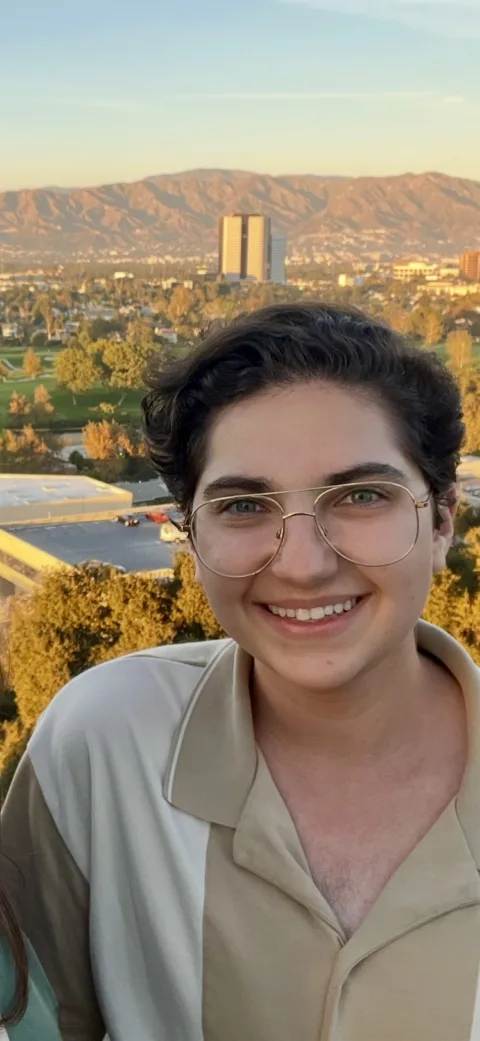
Marshall Degenhardt (he/him)
Writers Week Alumni 2017
Production Coordinator & Animator
What do you remember about participating in Writers Week? What was your favorite part?
Something that stuck out to me was the ability to foster my creative desire for writing, especially in an environment that pushed me further, and gave me more than my high school had to offer at the time. I had exhausted all of my AP courses and creative writing electives, but I really wanted to pursue creative writing as my degree, so being able to foster that desire in an elevating setting, with peers who wanted equally to learn and thrive, was really exciting and rewarding.
How do you find yourself using writing in your career, or in your everyday life?
I ended up pursuing the arts in college, focusing on animation and illustration. I graduated in three years by taking classes over the summer and got a job at an animation studio called Bento Box Studio— they’re mostly known for adult cartoons like Bob’s Burgers or Hazbin Hotel. I work in production now, and writing is incredibly important for my job. Mostly with conveying information between artists and clients. However, I still write in my personal time frequently. Rarely does a day go by where I don't write. I still hold a deep seated desire to one day write a novel and get it published.
What advice do you have for high schoolers in the program this summer who might be interested in pursuing writing-focused careers?
Go for it! There’s quite literally no downside. Because if you’re anything like me— where writing is a dream and passion, but you end up pivoting— any writing skills you learn apply to wherever you go. The ability to be clear, coherent, and concise in conveying your ideas will benefit you in your everyday life. Whether it be managing artists or talking to clients, the pursuit of writing is paramount, even if you are someone in another, less creative, career. It’s important to write in your daily life, and it’s even more important to be skilled at it.
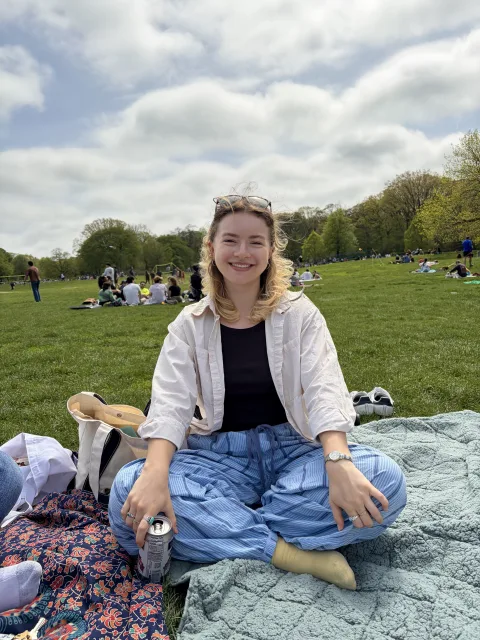
Anna Hauser (she/her)
Writers Week Alumni 2017
Assistant Editor at Simon & Schuster
What do you remember about participating in Writers Week? What was your favorite part?
My mom and I stayed in an Airbnb in Bronxville and I walked to campus every day, which made me feel very grown up. I remember I was one of the only people there who wasn't from the New York area, so I felt like I was in the presence of students who had a lot more life experience than I did and were much, much cooler. Everyone took to each other and looked out for one another with ease. We read Rilke's Letters to a Young Poet and it was my first time encountering him. Reading my work aloud on the final afternoon was my favorite part; it was terrifying, but I felt so much support from these people who I had somehow only known for a week. I can still conjure the mix of pride and anxiety and warmth!
How do you find yourself using writing in your career, or in your everyday life?
As an editor, I'm thinking about writing all the time! I read tons of submissions every week so I have had to train myself to be in the mindset where I can drop into an author's voice on a dime and wade around in their written world enough to get a real feel for it. The messy work of editing is my favorite part of my job. Obviously it's not my writing on the page, but the best editors put themselves simultaneously in the shoes of the reader and the author when they work. If you spend enough time editing a book, you start to know it almost like a play or a piece of machinery. It's detail work and big picture work at the same time. I know this comfort with language and all its imperfections will be beneficial during my law school years and in my career as a lawyer as well.
What advice do you have for high schoolers in the program this summer who might be interested in pursuing writing-focused careers?
There are so many ways to make good use of your desire to write and to act on your love of words. The path to a career that makes sense for you will definitely not be linear, and even if you don't find yourself writing professionally or publishing your work, that doesn't mean you aren't a writer or a creative person. In fact, I'm a strong believer that everyone should learn to love writing, even and especially people who don't think it's part of what they want out of their career. It doesn't take an editor to recognize a well-constructed or beautiful sentence and almost everyone benefits from clearer, more thoughtful writing— their own and other people's. I would advise anyone who wants writing to be a part of their work and their broader life to find ways to set aside time to write purely for pleasure and also to find the pleasure in even more mundane-seeming kinds of writing.