Sarah Lawrence College Remembers Ilja Wachs, Beloved Member of the Literature Faculty Since 1965
Sarah Lawrence College deeply mourns the loss of Ilja Wachs, a central figure in the Sarah Lawrence community since 1965. A member of the Literature faculty and a former Dean of the College, Ilja touched innumerable lives during his time at Sarah Lawrence, and was a larger-than-life influence on students, faculty, and staff alike.
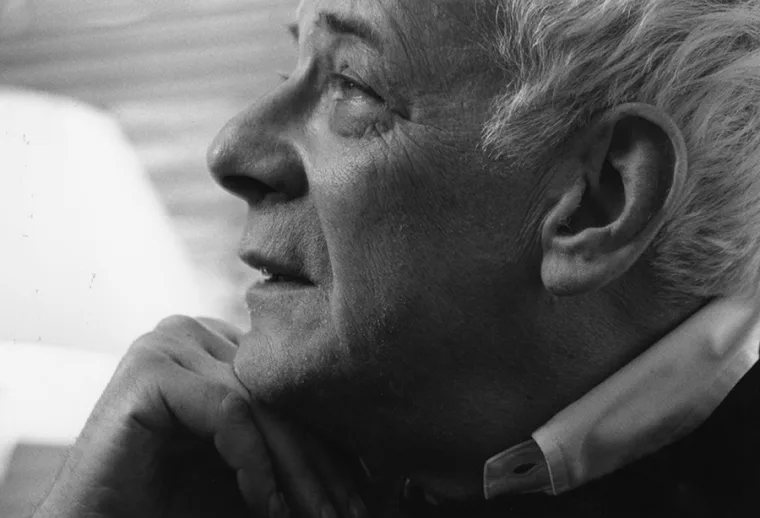
Below, we share a tribute to Ilja from Carol Zoref ’76, MFA ’97, a former student and longtime colleague and close friend of Ilja’s. We expect that this is just one of many fond remembrances of Ilja, and we encourage all who knew him to share their memories and tributes at sarahlawrence.kudoboard.com/boards/ilja-wachs.
Information on a campus memorial service will be forthcoming. At the request of Ilja’s family, donations may be made in his honor to Sarah Lawrence’s Ilja Wachs Chair in Outstanding Teaching and Donning at alum.slc.edu/wachs.
***
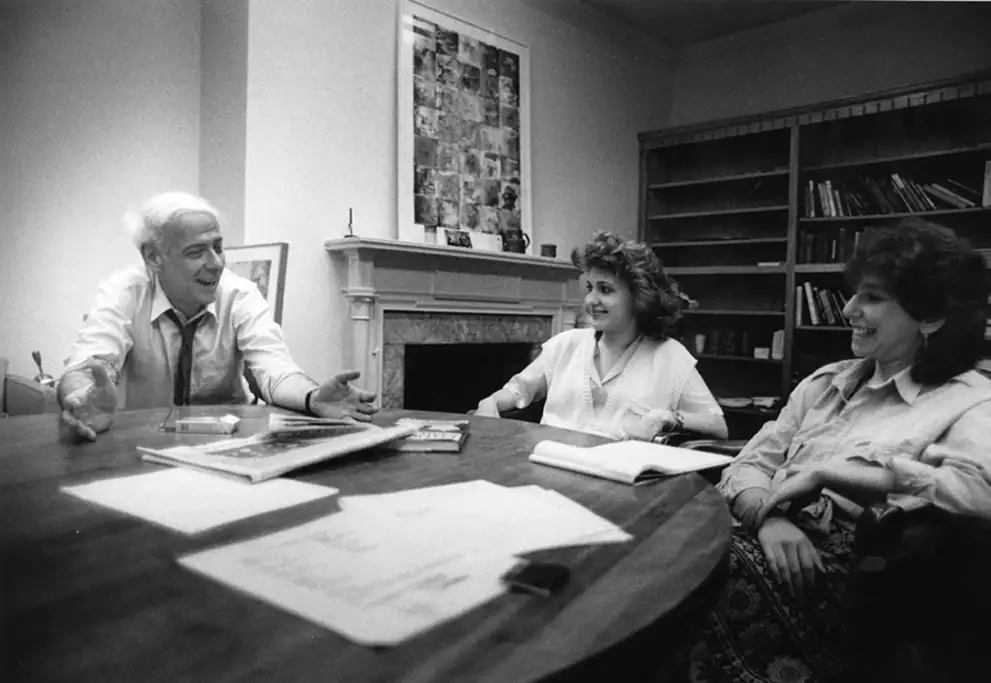
“No one embodies the values of Sarah Lawrence College more than Ilja Wachs,” said Sarah Lawrence president Cristle Collins Judd. “Our mission is to graduate world citizens who are diverse in every definition of the word, who take intellectual and creative risks, who cross disciplinary boundaries, and who are able to sustain exceptional academic discipline within a framework of humanistic values and concern for the community. Ilja lived and led with those values every single day of the 57 years he gave to our College and our community.”
The journey from the Brooklyn basketball court to SLC icon was not a sure thing. Ilja arrived in the U.S. with his parents in 1939, Jewish refugees who had fled Austria at the time of the Anschluss. It was an agonizing escape. Ilja’s father, Isaak, a well-known labor lawyer on the cusp of being arrested by the Nazi government, had taken a train to the border with Ilja’s mother, Sarah. They carried little with them, having left everything behind in their Vienna apartment, including Ilja, in order to not arouse suspicion. The plan was for Isaak to covertly slip across the border, while Sarah returned home, where she would wait for the anti-fascist underground to transport mother and son to safety and reunite the family. Things did not go as planned. Mr. & Mrs. Wachs were both expelled from Austria at the border and Ilja, then nearly seven-years old, found himself alone in the Vienna apartment. He remained there for the better part of a year, until he was finally reunited with his parents in France. The only visitor he recalled from his time alone was the family housekeeper. The Wachs family reunion was soon interrupted by the arrest of Ilja’s father and his internment in a French concentration camp. The hospitalization of his mother soon followed, and young Ilja was dispatched to what he later referred to as a “bourgeois family” in Switzerland. The host family believed that this little Jewish refugee needed to be “re-civilized” in a rigid, disciplined, and unyielding environment. This arrangement was disastrous for a frightened child, separated yet again from his parents at a time when mass murder was a quotidian function of government. Somehow, through an intrigue marked by twists and turns, the Wachs family was reunited and secreted away to New York, where they had relatives. The U.S. offered safety, at least for the time being. There were no guarantees that Jews would survive a German invasion and occupation of North America.
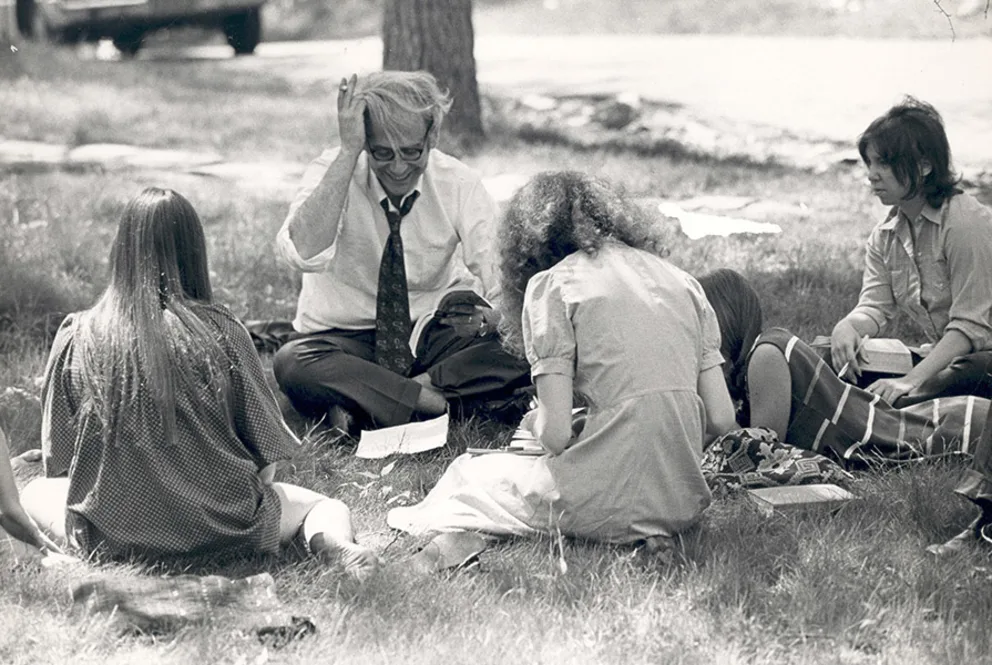
In the U.S., Ilja’s father was unable to practice law; his mother’s health further declined. Ilja attended public school, learned English, skipped classes and went to the movies, returned to school, attended Columbia University, switched majors from sociology to literature, graduated, worked as a proofreader and a building superintendent and a social worker, found a psychoanalyst whom he trusted, taught literature at Queens College, and in 1965 landed a guest faculty appointment at Sarah Lawrence. He was soon offered a regular contract teaching 19th and 20th century European and American literature. Thankfully, then-president Esther Raushenbush didn’t require the completion of his PhD dissertation a condition of Ilja receiving tenure. He never finished the dissertation, nor was there a book until 1999, when Ilja and co-author Baruch Hochman published Dickens: The Orphan Condition (Fairleigh Dickinson University Press).
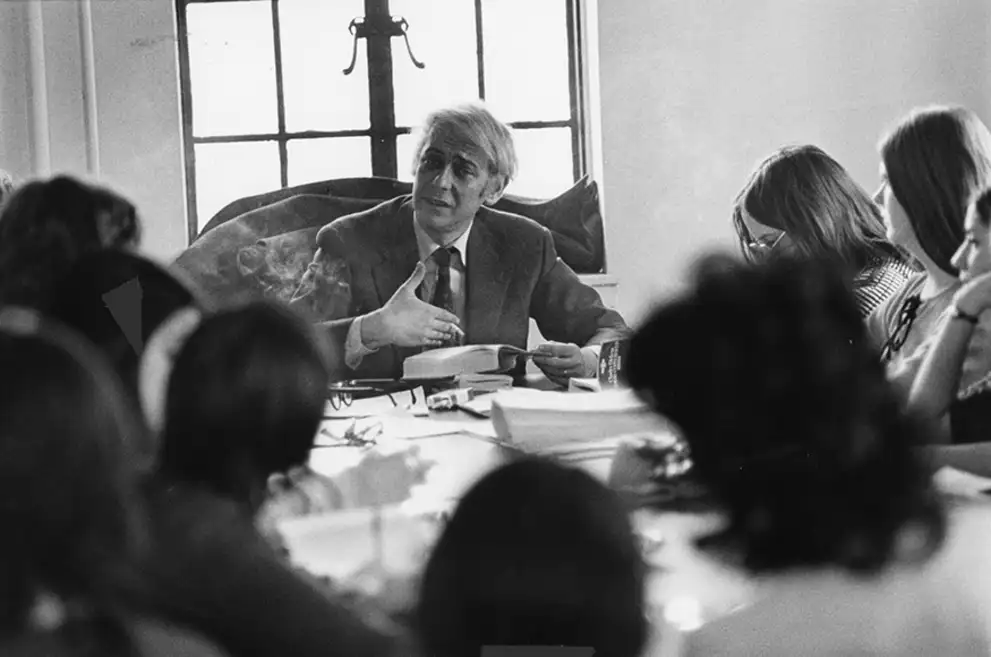
One can imagine that his personal history set the foundation for Ilja’s attachment to humanism above all else. Rather than speculating, time would be better spent reading the novels which, for Ilja, were the ultimate expressions of these values. Read David Copperfield, Middlemarch, The Adventures of Huckleberry Finn, Pride and Prejudice, and Anna Karenina. You will encounter staggering examples of sexism, racism, anti-Semitism, homophobia, and more. You will also encounter fiercely and luminously articulated struggles with moral development, income inequality, gender equality, public health, governance, passion, compassion, affordable housing, homelessness, nutrition, pollution, and education. You will be face-to-face with every nuanced aspect of the human condition. You will not unearth any answers in these novels. You might, however, discover new purpose in their questions. In that most private of moments, you will be honoring Ilja’s legacy in ways that mattered to him most.
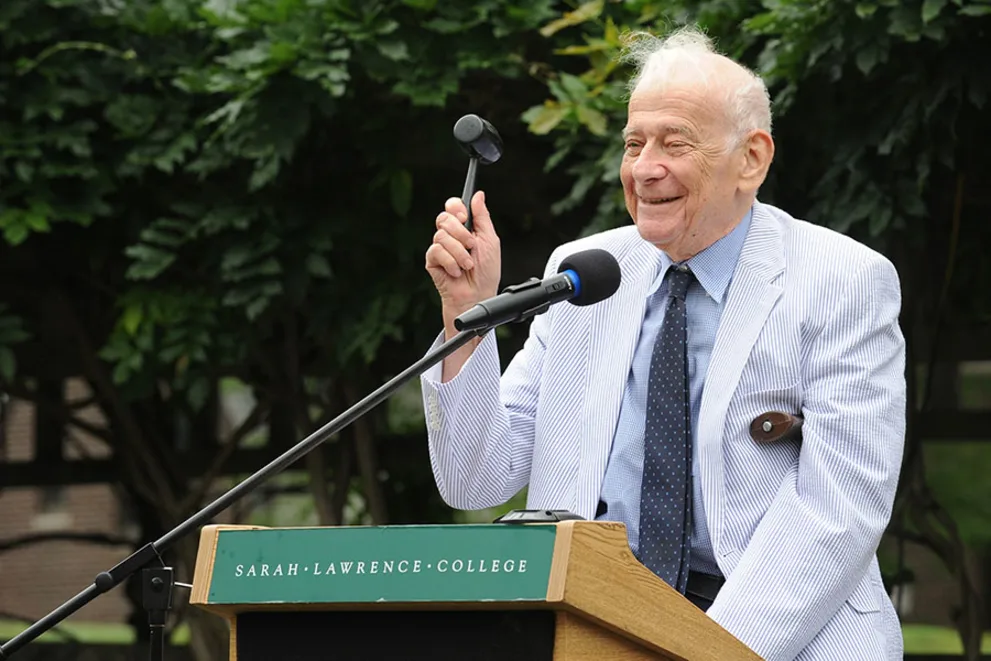
For more than half a century, Ilja advanced the cause of progressive education. Political ideologies have come and gone; new theories have dominated and disappeared from scholarly debates; budgets have been pressured by market forces and challenged anew by the COVID-19 pandemic. Through it all, Ilja remained a vocal and steadfast reminder that Sarah Lawrence has remained a principled, resilient, and sui generis place. As Ilja has described it: “…above all we work as honestly, as concretely, as generously as we can, not with the goal of producing an educated person, a finished product, a commodity for the marketplace, but a human and self-enriching human subject, a person whose growth of consciousness is ideally unending and enables them to make richer and more meaningful lives for themselves and for the world.” –Carol Zoref
***
Read more about Ilja’s path to Sarah Lawrence in this article from 2014.
Below, a memory from 2010 – “Ilja Wachs on the 19th Century Novel” – an event sponsored by Sarah Lawrence’s MFA in Writing program.